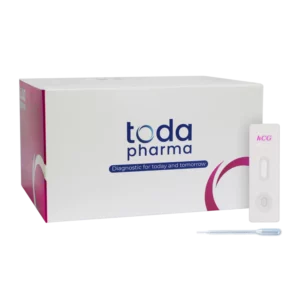
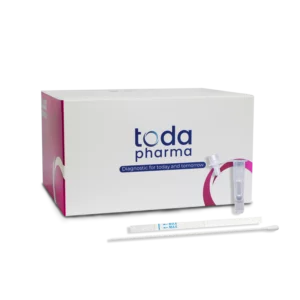
All fFN Diag
Test for identifying the risk of preterm labor
Toda fFN Diag is a rapid diagnostic test for screening for the risk of preterm labor by detecting fetal fibronectin in a vaginal swab sample from a pregnant woman.
- fFN
- Between 22 and 35 weeks of gestation
-
Interpretation Time
10 minutes
-
Sampling
Vaginal secretion
A simple, precise, and rapid diagnosis
The Benefits of Toda fFN Diag
EASY TO USE
Sampling is made easy with the swab included in the kit.
RAPID
Résultats en 10 minutes.
MINIMAL INTERFERENCE
With biological fluids (blood, semen...)
Performance
| fFN | |
| Sensitivity | ≥ 99,9% |
| Specificity | 99.0% |
A precise tool to confirm or rule out the risk of preterm labor
of women who consulted were able to return home after the examination.
Source : Étude clinique et épidémiologique « Gyneco-obstetrical emergencies at the obstetrics and gynecology department of Sousse: epidemiological study and becoming of the consultants », publiée sur PubMed Central / PMC (Bannour, I., 2022).
des femmes enceintes seront concernées par une menace d’accouchement prématuré au cours de leur grossesse.
Source : Guide clinique et informatif « Grossesse : Menace d’accouchement prématuré », publié par l’Espace Natal (Réseau de professionnels de la périnatilité, consulté en 2026).
cause d’hospitalisation : La MAP représente le premier motif d’admission à l’hôpital pendant la grossesse, se plaçant loin devant d’autres pathologies comme le diabète gestationnel ou l’hypertension.
Source : Chapitre médical « Menace d’accouchement prématuré », au sein du manuel Toute la pharmaco : 1500 fiches de médicaments, Éditions Vuibert (2022).
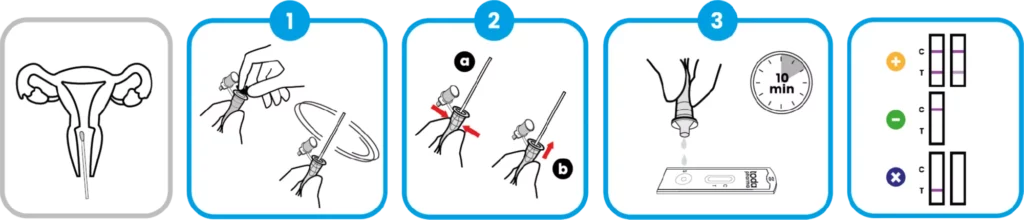
An accurate test starts with proper technique
Learn how to use the Toda fFN Diag in just 3 simple steps.
Practical information
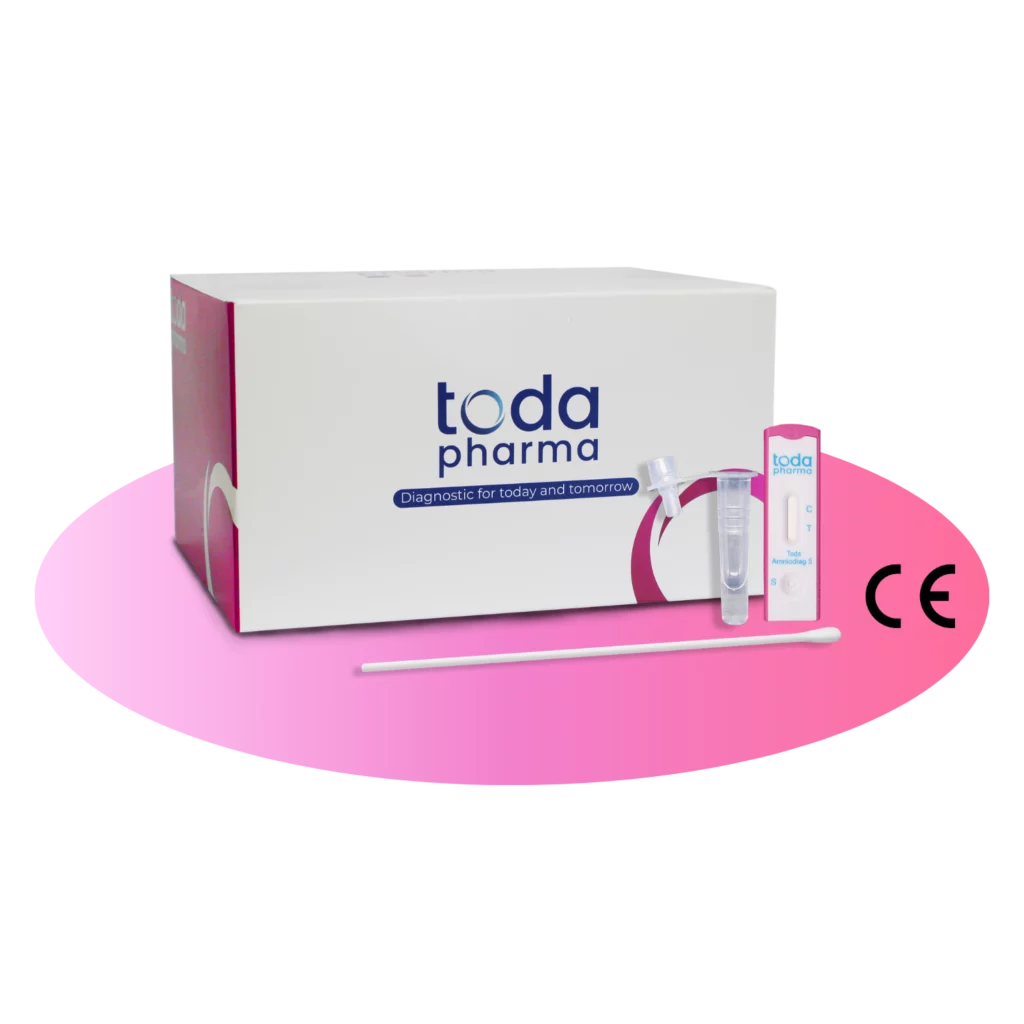
All kits contain:
- 10 individually packaged tests
- 1 detailed instruction leaflet
References
- 1053-10
The test should be stored at room temperature (between +2 and +30 °C).
Helpful documents
Catalog & product sheet
Obstetrics and gynecology catalog
Toda fFN Diag Product Sheet
For any additional information requests
"*" indicates required fields
Learn more
1. What is threatened preterm labor?
Threatened preterm labor (TPL) refers to a situation where regular uterine contractions occur before 37 weeks of gestation, accompanied by cervical changes, potentially leading to preterm birth.
It is a common obstetric emergency that requires prompt management to attempt to prolong the pregnancy and mitigate risks to the infant. The presence of premature rupture of membranes can exacerbate the situation and accelerate labor, highlighting the importance of accurate diagnosis with a test like Amniodiag® 5 in cases of uncertainty.
2. What is fetal fibronectin (fFN)?
Fetal fibronectin (fFN) is a glycoprotein present during pregnancy, specifically at the interface between the uterine wall (decidua) and the fetal membranes (chorion). It functions as a “biological glue” that helps maintain adhesion between these structures.
In pregnant women, fFN is normally detectable in cervicovaginal secretions up to 22 weeks of gestation, after which it disappears until approximately 34-35 weeks, unless an anomaly is present.
Its reappearance between 22 and 35 weeks is considered abnormal and may indicate premature detachment between the membranes and the uterus — an early sign of preterm birth risk (threatened preterm labor or TPL).

Complementary diagnostics in this range
-
Obstetric Diagnosis
Toda Amniodiag®5
Test for the detection of premature rupture of fetal membranes (PROM test)Discover
Need information, training, or a quote?
Tell us what you are looking for, and we will promptly provide a tailored solution.