PRECISE AND QUANTIFIED MEASUREMENT



-
Breathalyzers
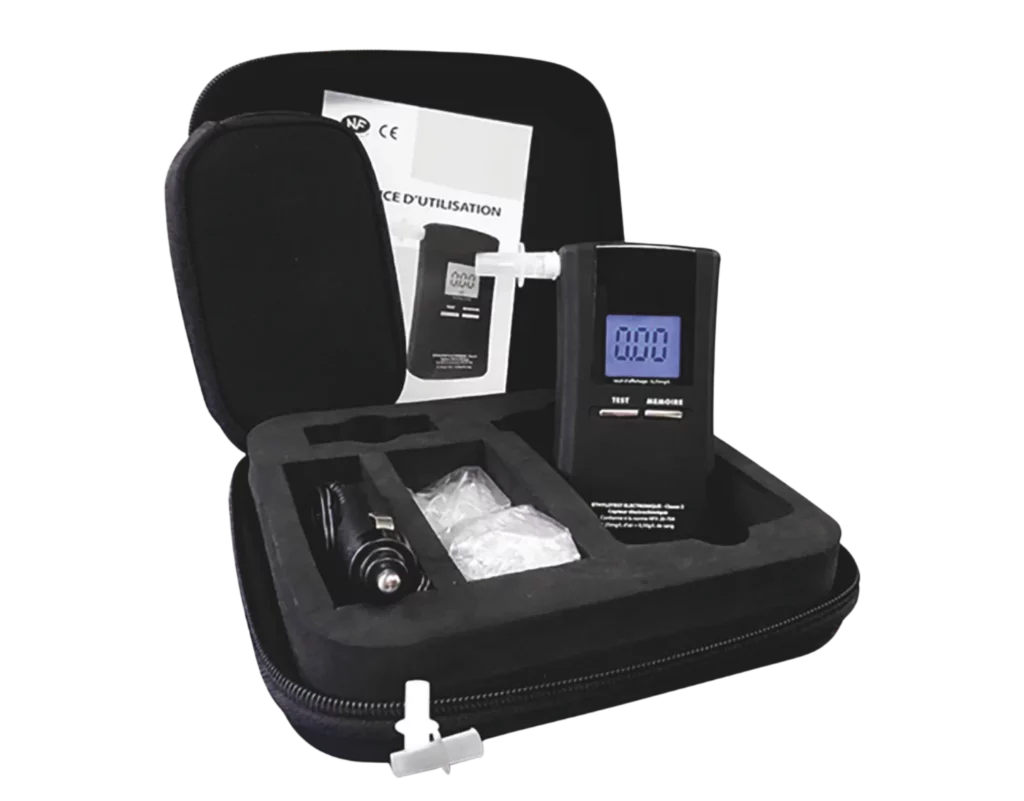
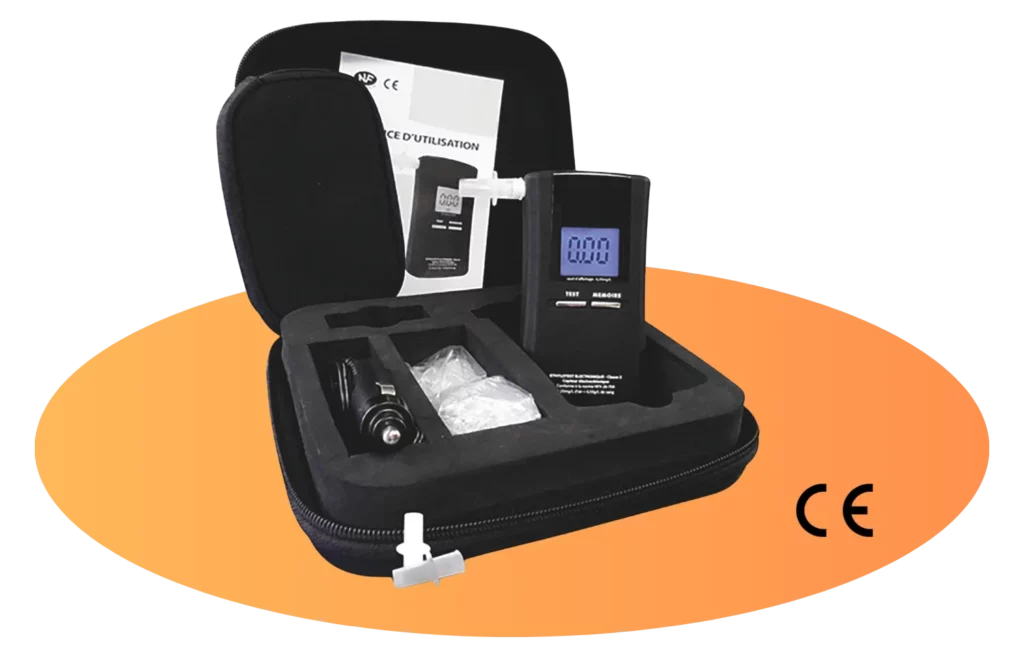
Chemical Breathalyzer
Chemical breathalyzer for controlling blood alcohol contentDiscover
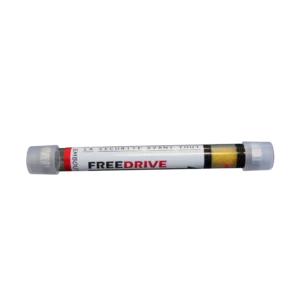
Measures blood alcohol content quickly and accurately.
Equipped with a breath pressure sensor and an electrochemical sensor.
Advantages of the electronic breathalyzer.
PRECISE AND QUANTIFIED MEASUREMENT
Displays blood alcohol content with precision, allowing for rapid determination of legal compliance.
Can be used multiple times before recalibration.
Rapid and legible results in seconds.
Easily transportable due to its compact carrying case.
des hommes et 8 % des femmes en activité professionnelle ont un usage dangereux de l’alcool selon les critères de l’Organisation mondiale de la Santé.
Source : Rapport national « L’Essentiel sur… Addictions en milieu professionnel : employeurs et employés, tous concernés », publié par la Mission interministérielle de lutte contre les drogues et les conduites addictives [MILDECA] (Données mises à jour en 2023).
of workplace accidents involve excessive alcohol consumption.
Source : Article juridique « Consommation d’alcool et drogues au travail : comment réagir ? », rédigé par Aline Marcheguet, publié sur le site du réseau Gesec (10 juillet 2024).
of deaths in high-risk sectors are linked to alcohol consumption.
Source : Article juridique « Consommation d’alcool et drogues au travail : comment réagir ? », rédigé par Aline Marcheguet, publié sur le site du réseau Gesec (10 juillet 2024).
Kit Contents:
References
"*" indicates required fields
Alcohol consumption remains a widespread practice in France.
According to the latest data from Santé publique France, nearly 9 out of 10 adults report consuming alcohol at least occasionally, and approximately a quarter of them consume it weekly.
While the general trend has shown a slight decrease over several years, episodic heavy drinking (binge drinking), particularly among young adults, remains a concern.
Alcohol remains one of the primary causes of road accidents, especially among 18-24 year olds, for whom it is implicated in approximately 1 out of 3 fatal accidents.
These figures underscore the importance of prevention, awareness, and screening tools.
Both chemical and electronic breathalyzers share the same objective: to measure the alcohol concentration in exhaled breath to estimate blood alcohol content (BAC).
Their primary difference lies in their mode of operation.
In summary, the chemical breathalyzer is ideal for occasional use, particularly for personal or corporate prevention, whereas the electronic version is better suited for frequent or professional applications.
Many theories circulate regarding how to 'trick' a breathalyzer, but the reality is often quite different.
Contrary to popular belief, drinking water, consuming coffee, brushing one's teeth, or waiting a few minutes does not eliminate alcohol from the breath. These actions may temporarily mask the odor of alcohol but do not alter the measured blood alcohol content (BAC), which reflects the alcohol concentration in the blood, not in the mouth.
Similarly, the use of mints or mentholated chewing gum does not influence the test result.
The duration for which alcohol is detectable in the blood depends on several factors: the quantity consumed, gender, weight, health status, and even whether the individual has eaten or not.
On average, the body eliminates approximately 0.15 g/L of alcohol per hour. This implies that after consuming a standard drink (approximately 10 g of pure alcohol), blood alcohol content decreases very slowly and can remain detectable for several hours. For instance, an individual with a BAC of 0.5 g/L will require approximately 3 to 4 hours to return to zero. Therefore, relying solely on one's perception is hazardous: only a breathalyzer test can verify if one is truly fit to drive.
Tell us what you are looking for, and we will promptly provide a tailored solution.