Toda Infludiag A&B
Rapid detection test for influenza A and B
Toda Infludiag A&B est un test immunochromatographique rapide pour la détection qualitative des virus de la grippe de type A et de type B dans les prélèvements effectués par écouvillonnage nasopharyngé ou nasal, lavage nasal ou par aspiration nasale.
- Influenza A&B
-
Interpretation time
15 minutes
-
Échantillonnage
Prélèvement nasopharyngé ou nasal, lavage nasal ou aspiration nasale
A rapid, accurate, and convenient test
The benefits of Toda Infludiag A&B.
CONVENIENT
Test fourni en kit individuel avec des flacons unidoses prêts à l’emploi
EFFICIENT
Évite la multiplication des tests ce qui limite les coûts.
ACCURATE, SENSITIVE, AND SPECIFIC
See performance table below.
SIMPLE
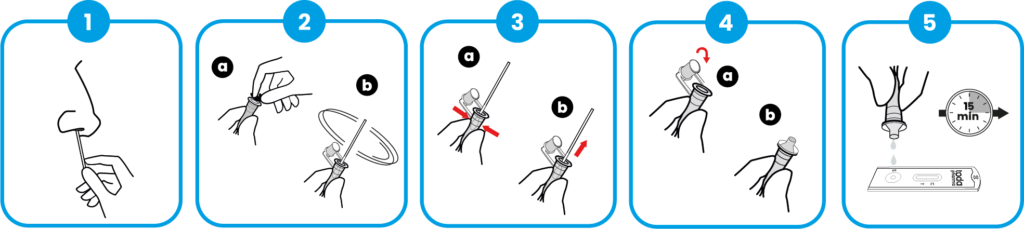
Utilisation en 5 étapes sans complexité technique.
Performance
| PERFORMANCE | FLU A | FLU B |
| Sensitivity | 96.0% | 94.4% |
| Specificity | 99.3% | 99.7% |
An accurate test starts with proper technique
Learn how to use the Toda Infludiag A&B in 5 simple steps.
This test is intended for use by healthcare professionals only.
Practical information
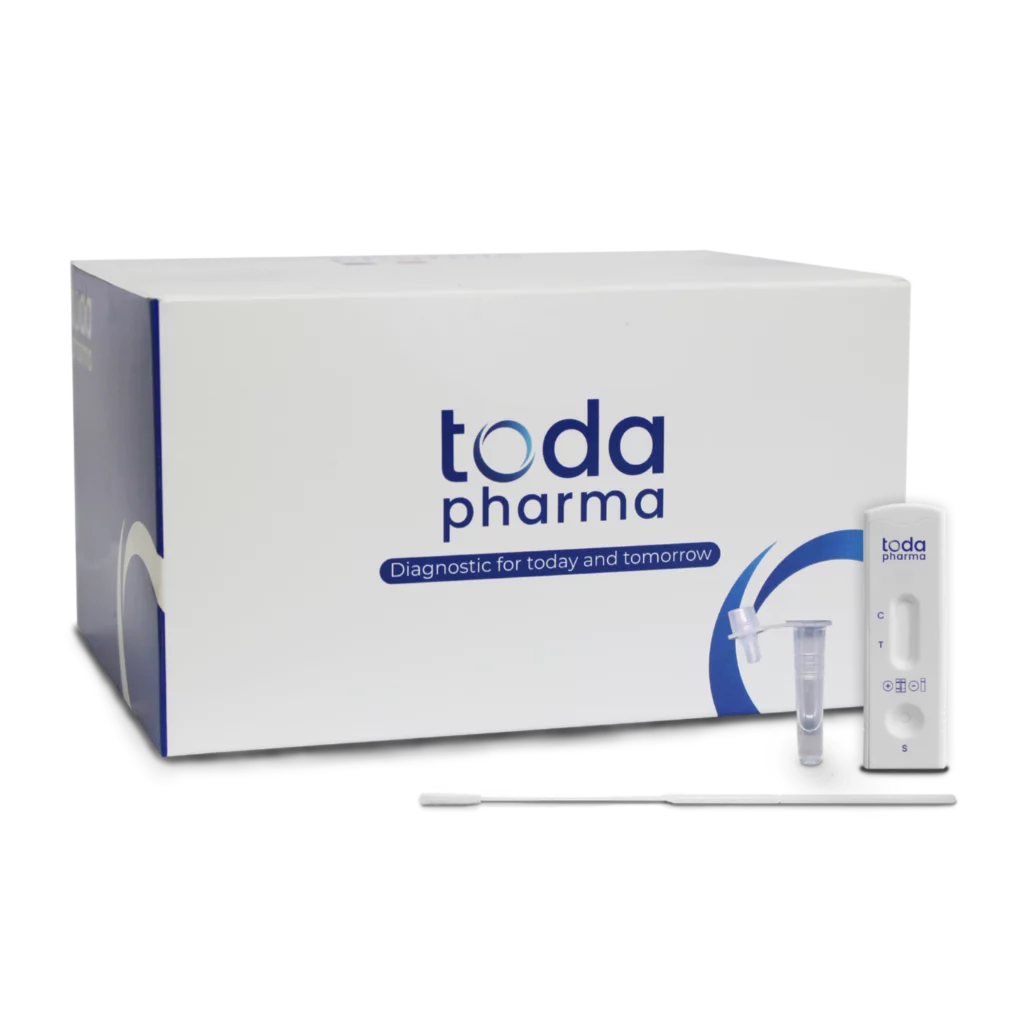
Tous les coffretsToda Infludiag A&B contiennent :
- 10 tests au format cassette
- 10 écouvillons
- 10 flacons de diluant
- 1 detailed package insert
References
- Box of 10 tests: 1061
The test should be stored at room temperature (between +2 and +30 °C).
Helpful documents
Catalog & product sheet
Infectious Diseases Catalogue
Toda Infludiag A&B Product Sheet
For any additional information requests
"*" indicates required fields
Learn more
1. What is Influenza?
Influenza is an acute viral infection of the respiratory tract caused by Influenza viruses. It is easily transmitted from person to person, primarily through droplets emitted when an infected individual coughs, sneezes, or speaks.
There are several types of influenza viruses, among which the most common in humans are type A and B viruses. These two types are responsible for seasonal epidemics that typically occur in autumn and winter.
2. What is the difference between Influenza A & B?
Influenza A and Influenza B are two distinct viruses that cause fairly similar symptoms (fever, body aches, fatigue, cough), but they do not behave in exactly the same way.
Type A virus is the most variable and can affect both humans and certain animals, which explains its role in major seasonal epidemics and occasionally pandemics.
Type B, on the other hand, circulates exclusively among humans and evolves more stably, making it generally less variable and often less involved in large-scale influenza outbreaks.
In practice, both can cause equally unpleasant influenza infections, but their circulation patterns and mutation capabilities primarily distinguish them at an epidemiological level.

3. How long is Influenza contagious?
An individual with influenza is generally contagious approximately one day before symptom onset and remains so for 5 to 7 days after their appearance. The risk of transmission is highest at the very beginning of the illness, when fever, cough, and fatigue are prominent. In children or vulnerable individuals, this period may sometimes be slightly longer. Even if symptoms begin to subside, it is still possible to transmit the virus for several days, hence the importance of limiting close contact until full recovery.
Complementary diagnostics in this range
-
Diagnosis of Infectious Diseases
Toda Strepdiag A
Rapid diagnostic test for the detection of Group A Streptococcal pharyngitis.Discover -
Diagnosis of Infectious Diseases
Toda Covdiag X – Triplex
Rapid diagnostic test for COVID-19, influenza A and B, and RSV.Discover -
Diagnosis of Infectious Diseases
Toda Fluronadiag
Rapid diagnostic test for COVID-19 and Influenza A&B viruses.Discover -
Diagnosis of Infectious Diseases
Toda Coronadiag Inc.
Rapid diagnostic test for the detection of SARS-CoV-2 antigens.Discover
Need information, training, or a quote?
Tell us what you are looking for, and we will promptly provide a tailored solution.