Toda Coronadiag Inc.

Infectious Diseases

Rapid Antigen Diagnostic Test for the COVID-19 Virus

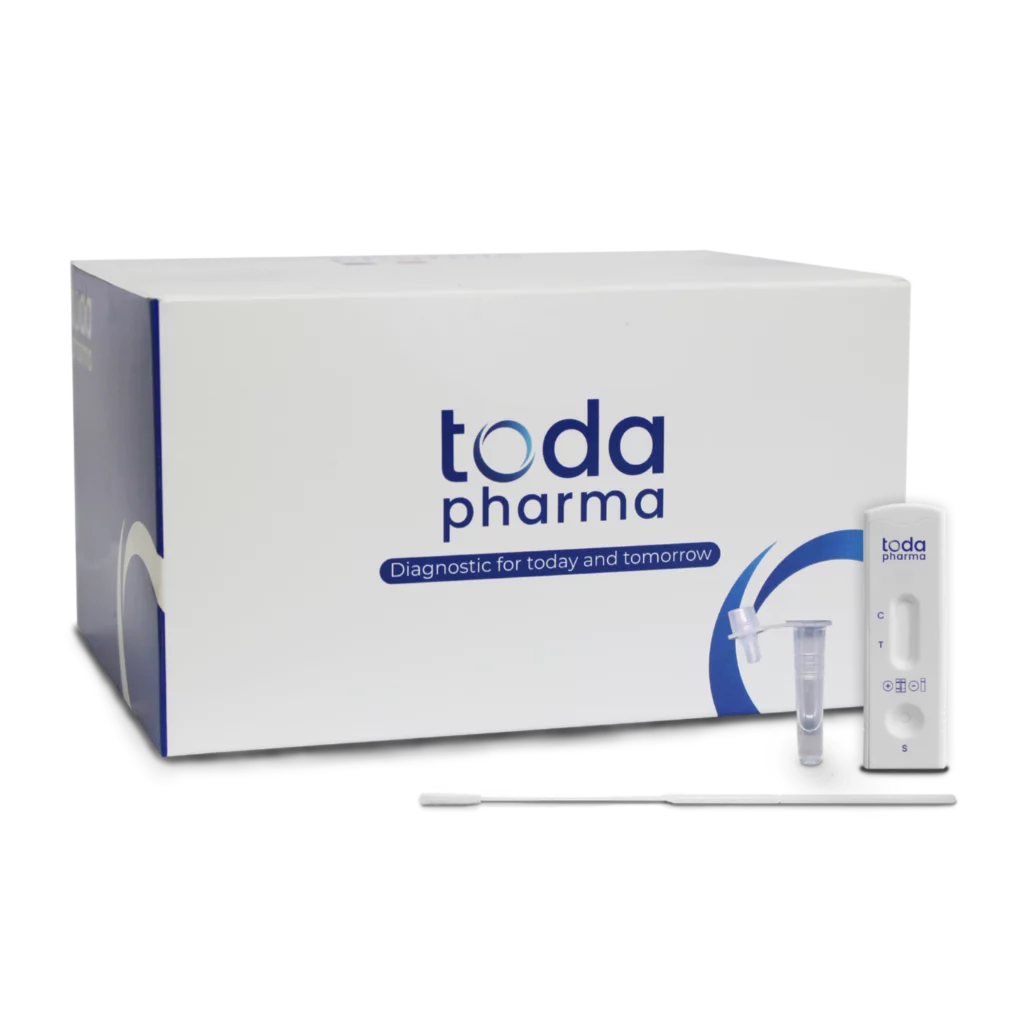
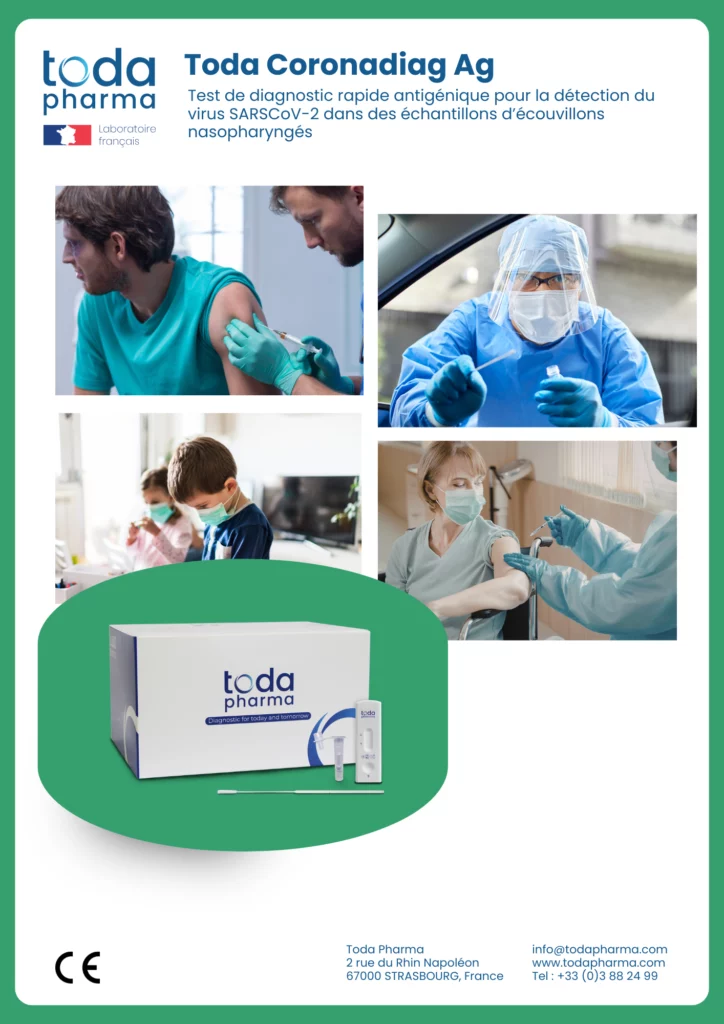
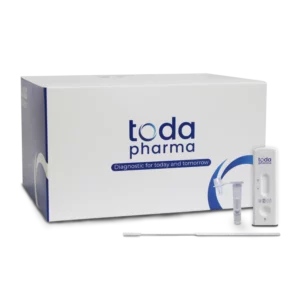
Toda Coronadiag Ag est un test de diagnostic rapide antigénique pour la détection du virus SARS-CoV-2 dans des échantillons d’écouvillons nasopharyngés ou nasaux.

A rapid, accurate, and convenient test

Les avantages du Toda Coronadiag Ag 

CONVENIENT

Individual, ready-to-use buffer vials and a single-use diluent included for each test, limiting contamination risks.

MULTI-VARIANTS

Capable of detecting multiple SARS-CoV-2 variants for extended diagnostic coverage.

ACCURATE, SENSITIVE, AND SPECIFIC

Sensitivity: 97.7%

Specificity: 99.1%

Accuracy: 99.0%

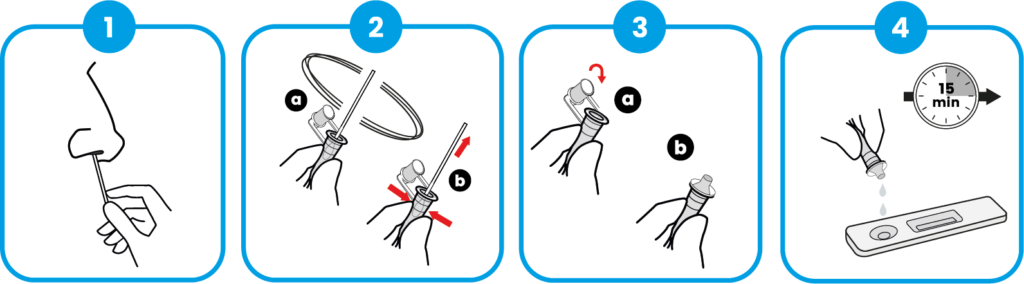
An accurate test starts with proper technique

Découvrez en 4 étapes simples comment utiliser le Toda Coronadiag Ag.

This test is intended for use by healthcare professionals only.

Practical information

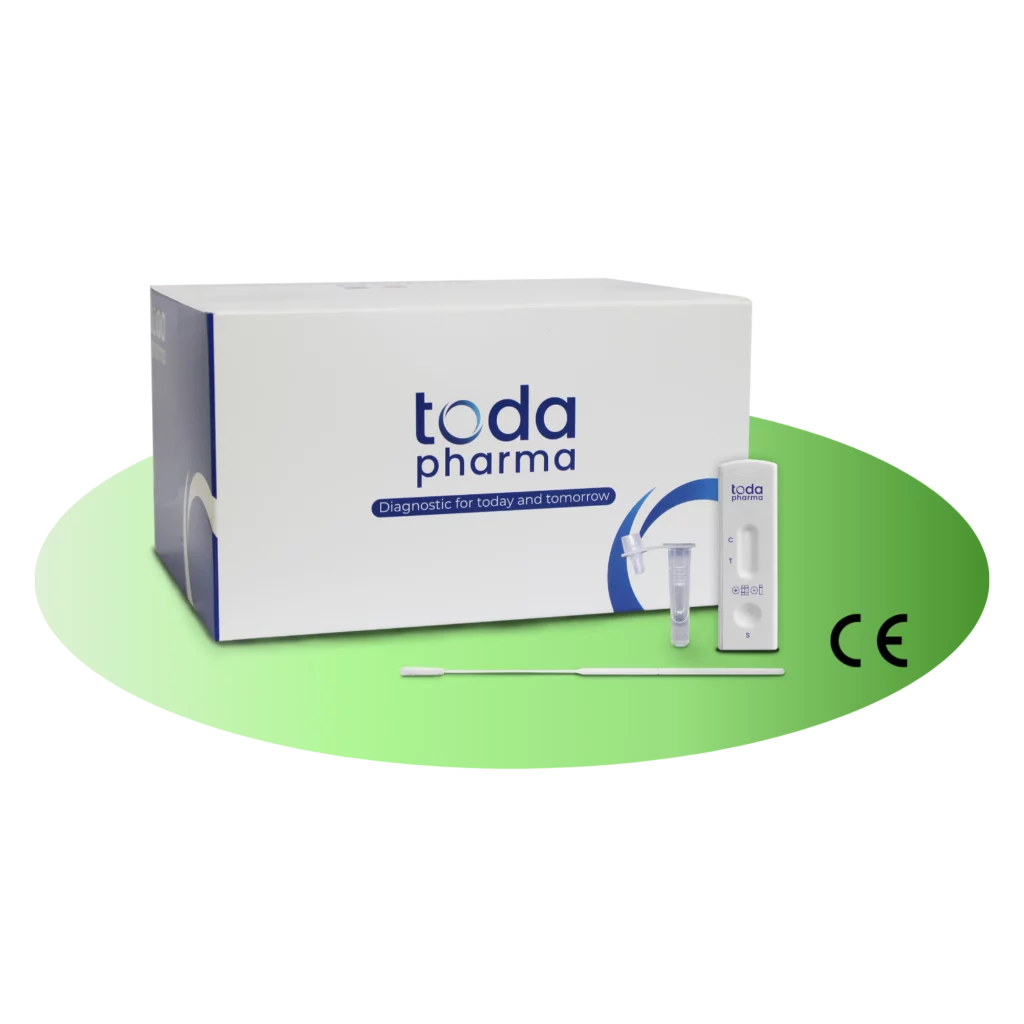
Tous les coffrets Toda Coronadiag Ag contiennent :

References

  • Box of 10 tests: 2276-10
  • Box of 20 tests: 2276-20

The test should be stored at room temperature (between +2 and +30 °C).

Helpful documents

Catalog & product sheet

Infectious Diseases Catalogue

Fiche produit Toda Coronadiag Ag

For any additional information requests

"*" indicates required fields

Last Name*
Email*
Do you have a question or a specific need? Our team is here to help.

Learn more

1. What is the difference between an antigen test and a PCR test?

Antigen tests and PCR tests are two methods for COVID-19 screening, but they operate differently.

The antigen test directly detects viral proteins in the sample. It is straightforward and, notably, rapid, yielding results within minutes. Consequently, it is frequently employed when immediate screening is required, such as in cases of recent symptom onset.

The PCR test, conversely, detects the virus's genetic material. It is performed in a laboratory and requires more time to produce results, but it is also more sensitive and can identify infections even with a low viral load.

In summary, the antigen test is favored for its rapidity, whereas the PCR test remains the gold standard for confirming a diagnosis.


Yes, this is possible. An individual can be infected with the virus and transmit it to others without necessarily exhibiting signs of the illness.

This phenomenon is known as an asymptomatic infection. In such cases, the individual feels well, but the virus is still present in the body and can be transmitted, particularly during close interactions such as speaking, coughing, or simply breathing in proximity to others.

For this reason, screening and preventive measures remain crucial, even in the absence of symptoms.

Not necessarily. A negative test is reassuring, but it does not definitively rule out an infection with 100% certainty.

Indeed, if the test is performed too early after exposure to the virus, the viral load may still be too low to be detected. It is also possible that the quantity of virus varies depending on the timing of the sample collection or the method by which it was performed.

Therefore, in cases of persistent symptoms or uncertainty, it may be advisable to repeat the test a few days later or to supplement it with another type of screening.

Complementary diagnostics in this range

Need information, training, or a quote?

Tell us what you are looking for, and we will promptly provide a tailored solution.

Back to Top