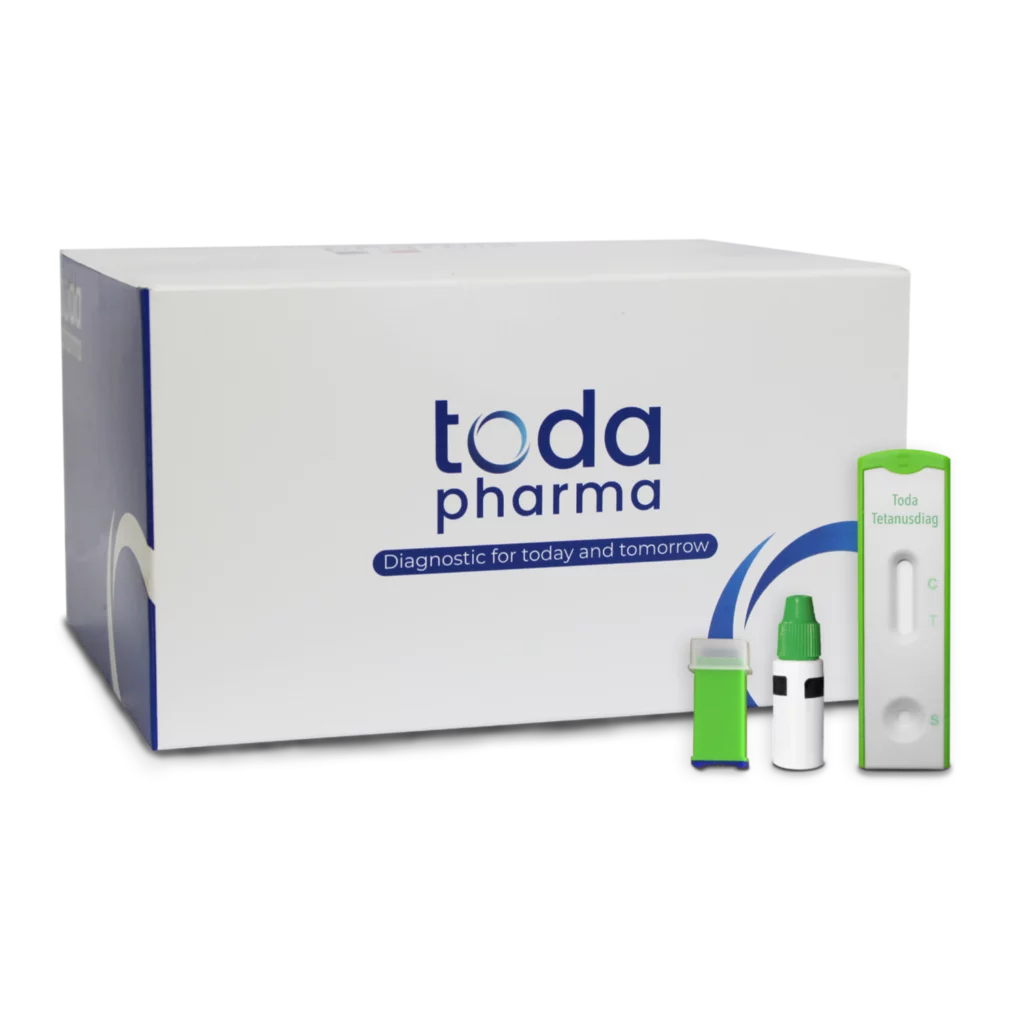
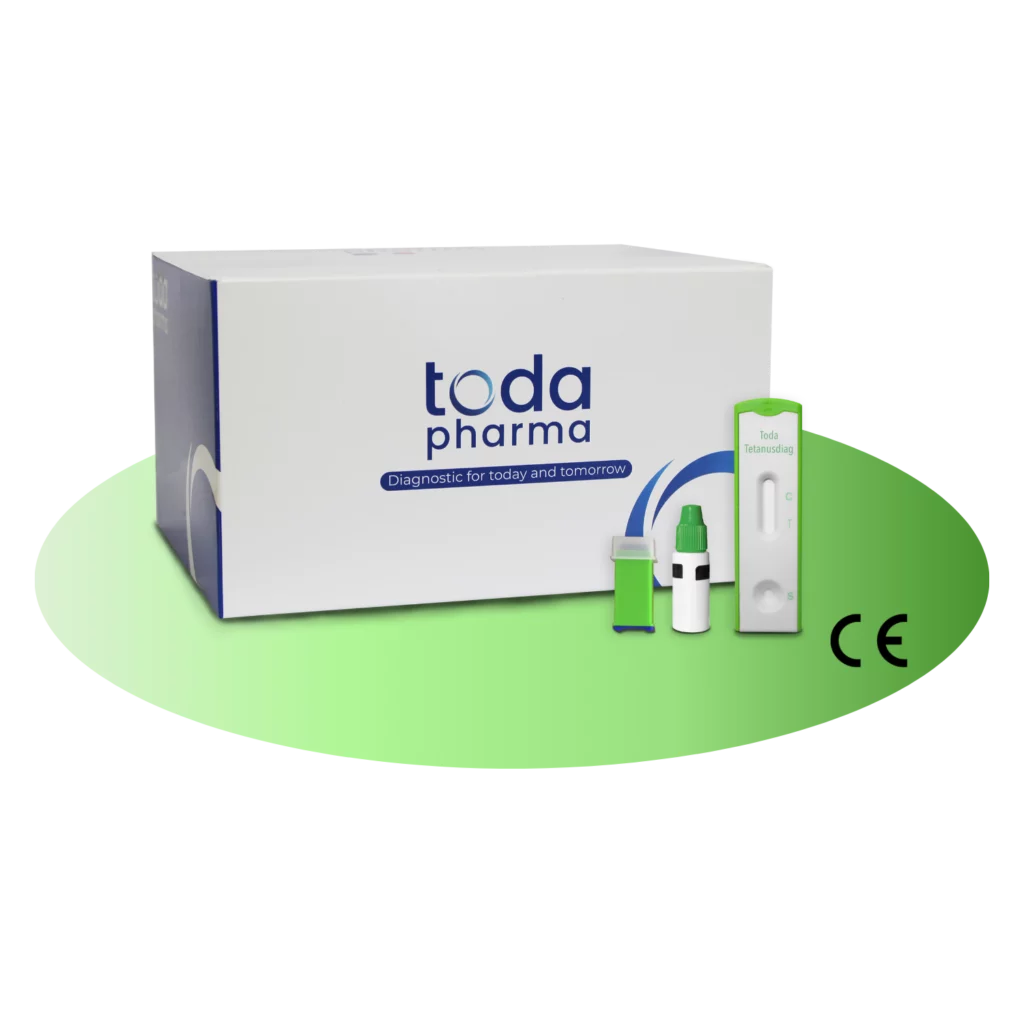
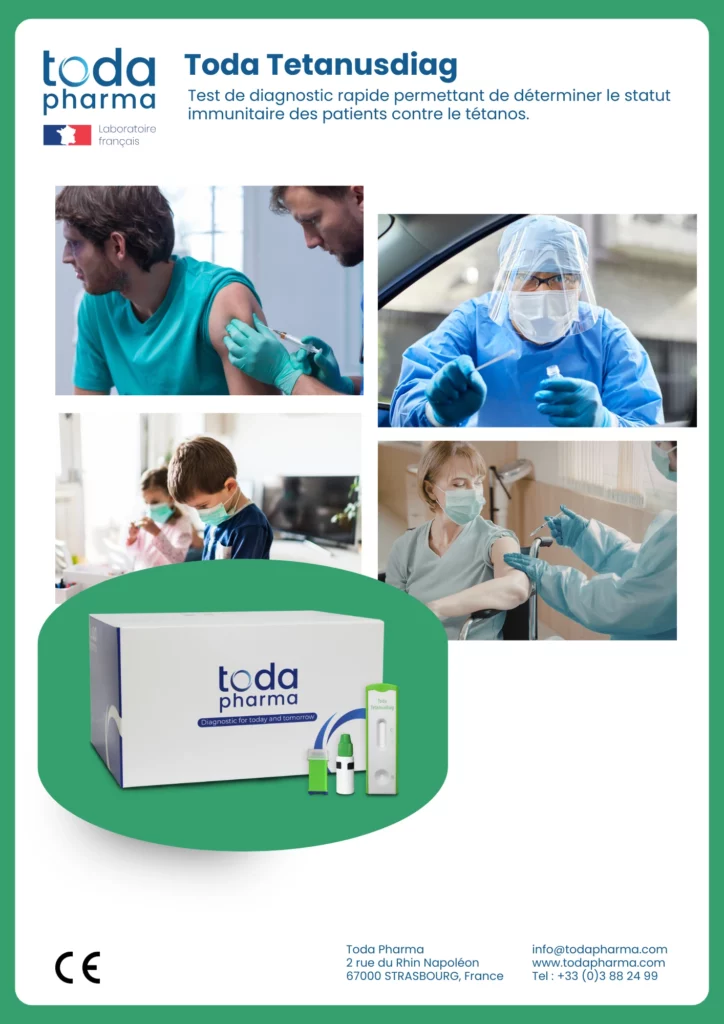
Toda Tetanusdiag
Rapid screening test for tetanus immunization status
Toda Tetanusdiag is a rapid diagnostic test designed to determine patients' immune status against tetanus. This immunochromatographic test detects tetanus toxin antibodies
in serum, plasma, or whole blood.
-
Interpretation time
15 minutes
-
Sampling
Blood, serum, or plasma
A rapid, accurate, and convenient test
Les avantages du Toda Tetanusdiag
RAPID
Results in 15 minutes.
RELIABLE
Enables accurate assessment of tetanus immunity status to ensure appropriate care.
PRISE EN CHARGE OPTIMISÉE
Contributes to appropriate interventions and optimized care.
ACCURATE, SENSITIVE, AND SPECIFIC
Sensitivity: 94.1%
Specificity: 98.9%
Accuracy: 97.8%
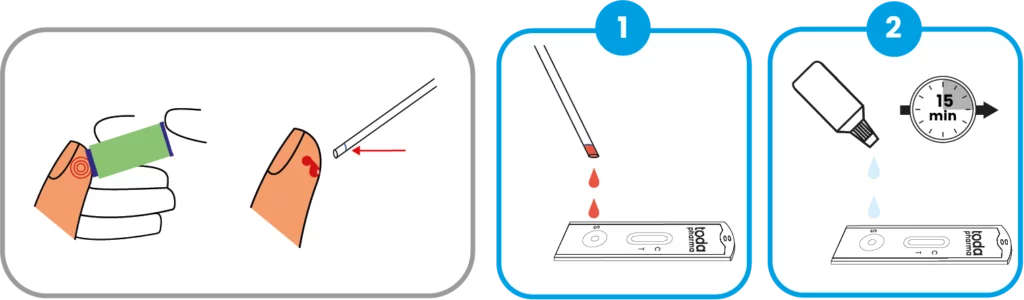
An accurate test starts with proper technique
Découvrez en 2 étapes simples comment utiliser le Toda Tetanusdiag.
This test is intended for use by healthcare professionals only.
Practical information
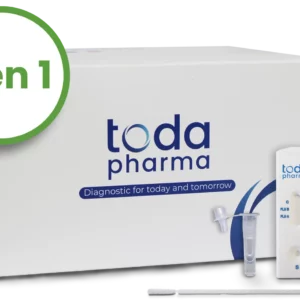
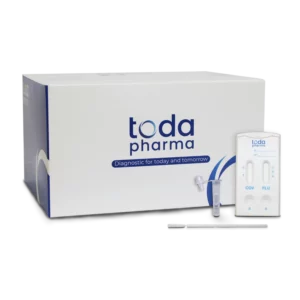
Tous les coffrets Toda Tetanusdiag contiennent 10 ou 20 kits composés de:
- 1 cassette-style test
- 1 pipette jetable
- 1 disposable lancet
- 1 patient tracking label
- 1 vial of diluent
- 1 detailed package insert
References
- Box of 10 tests: 2271-1-10
- Box of 20 tests: 2271-1-20
The test should be stored at room temperature (between +2 and +30 °C).
Helpful documents
Catalog & product sheet
Infectious Diseases Catalogue
Fiche produit Toda Tetanusdiag
For any additional information requests
"*" indicates required fields
Learn more
1. Qu'est-ce que le tétanos ?
Le tétanos est une maladie infectieuse grave causée par une bactérie appelée Tétanos Clostridium tetani. Cette bactérie produit une toxine qui attaque le système nerveux et provoque des contractions musculaires douloureuses et involontaires. Elle peut entraîner des difficultés à respirer et nécessite une prise en charge médicale rapide.
2. Comment contracte-t-on le tétanos ?
The Clostridium tetani bacterium enters the body through a wound that is often deep, dirty, or poorly cared for. This can be a cut, a puncture wound (from a rusty nail or a thorn), a burn, an animal bite, or even a surgical wound.
In these low-oxygen environments (such as deep or necrotic wounds), the spores develop into active bacteria that produce the toxin responsible for the symptoms.
Tetanus is not transmitted from person to person; it is an infection confined to a contaminated wound.
3. Quels sont les symptômes ?
The first symptoms of tetanus usually appear between 3 and 21 days after exposure.
Early symptoms include jaw stiffness (known as trismus or “locked jaw”), muscle pain, and difficulty opening the mouth.
Gradually, muscle spasms become more frequent and painful, often affecting the muscles of the neck, back, and limbs. These contractions can cause abnormal postures, known as opisthotonos (arching of the back). Other associated symptoms include fever, profuse sweating, agitation, and, in severe cases, breathing difficulties due to involvement of the respiratory muscles.
4. Comment prévenir le tétanos ?
Prevention relies primarily on vaccination, which is highly effective. The tetanus vaccine is included in childhood immunization programs, and booster shots are recommended every 10 years for adults.
If you sustain an injury, especially if it is deep or dirty, it is important to clean the wound thoroughly and consult a healthcare professional, who will determine whether a booster shot or immunoglobulin treatment is necessary. Good hygiene and careful medical monitoring of wounds can also help prevent this disease.
5. Un objet rouillé donne t-il le tétanos ?
This is a widespread misconception, but it is false. It is not the rust itself that causes tetanus, but rather the possibility that a rusty object is dirty or has been in contact with soil, dust, or feces — environments where the bacterium Clostridium tetani is often found.
This bacterium enters the body through a deep wound, especially if it is poorly cleaned, oxygen-deprived, and contaminated. Rusty objects, such as nails or gardening tools, simply increase the risk because they are often old, exposed to the environment, and can cause penetrating injuries. Thus, it is not the rust, but the type of injury and bacterial contamination that promote infection.
Complementary diagnostics in this range
-
Diagnosis of Infectious Diseases
Toda Infludiag A&B
Rapid diagnostic test for Influenza A and B virusesDiscover -
Diagnosis of Infectious Diseases
Toda Strepdiag A
Rapid diagnostic test for the detection of Group A Streptococcal pharyngitis.Discover -
Diagnosis of Infectious Diseases
Toda Covdiag X – Triplex
Rapid diagnostic test for COVID-19, influenza A and B, and RSV.Discover -
Diagnosis of Infectious Diseases
Toda Fluronadiag
Rapid diagnostic test for COVID-19 and Influenza A&B viruses.Discover
Need information, training, or a quote?
Tell us what you are looking for, and we will promptly provide a tailored solution.