

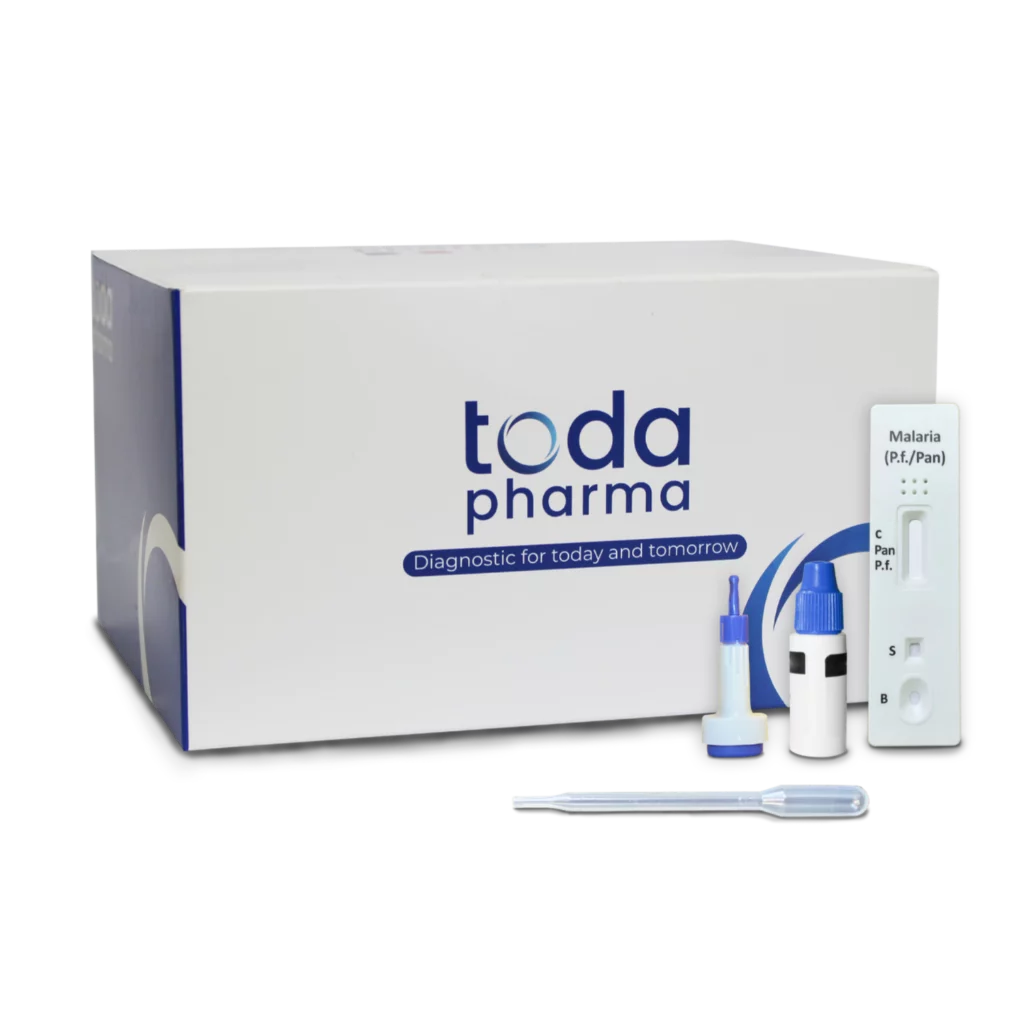


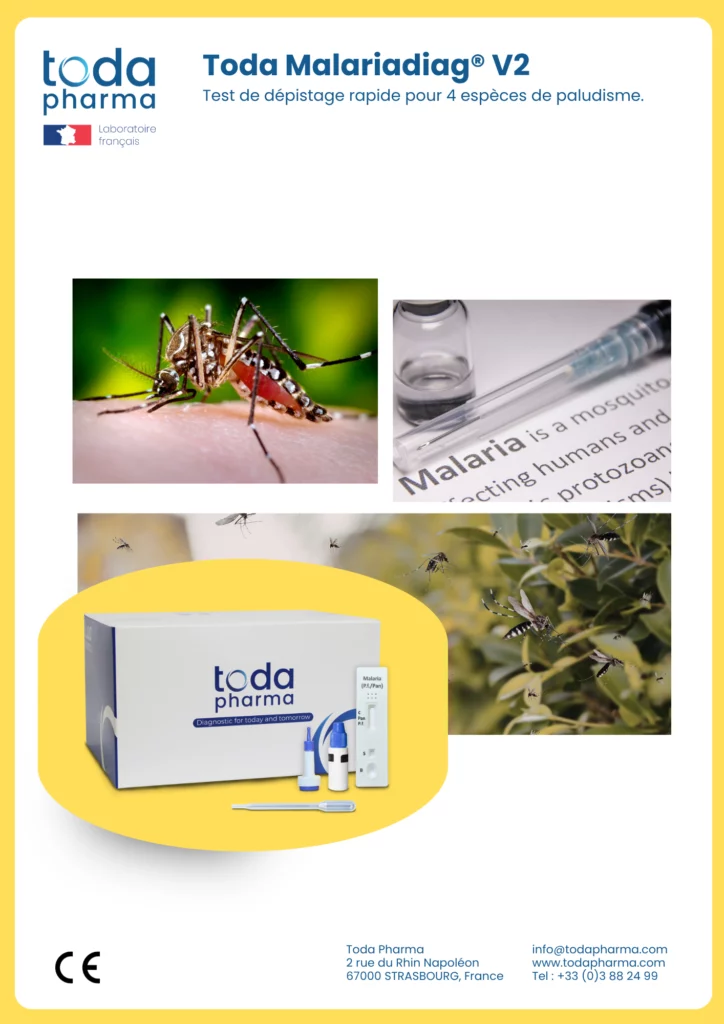


Toda Malariadiag® V2 est un test immunochromatographique rapide permettant la détection du Plasmodium falciparum et des trois autres espèces de Plasmodium – vivax, ovale et malariae – dans le sang. Le test utilise une paire d’anticorps qui détectent les antigènes des plasmodiums à partir d’un échantillonnage de sang entier.
Les avantages du Toda Malariadiag® V2.
Single-use safety lancets and disinfectant pads are provided with the tests.
+ Option to supply the test in a kit case with included thermometer
Sensibilité P.falciparum : 99,9%
Sensibilité P. vivax : 98,2%
Spécificité : 99,9%
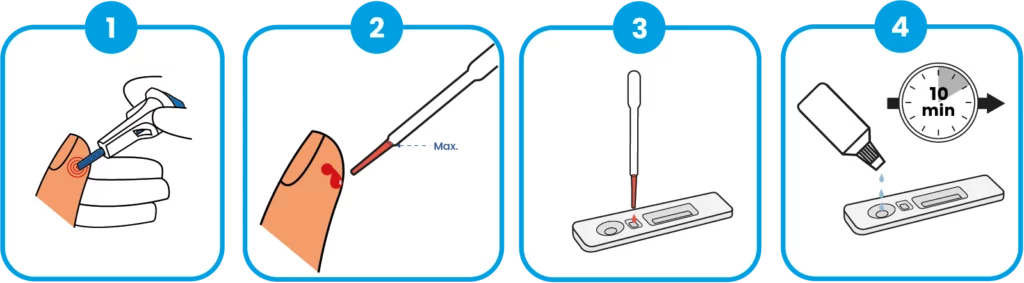
Utilisation en 4 étapes sans complexité technique.
Discover how to use Toda Malariadiag®V2 in 4 simple steps.
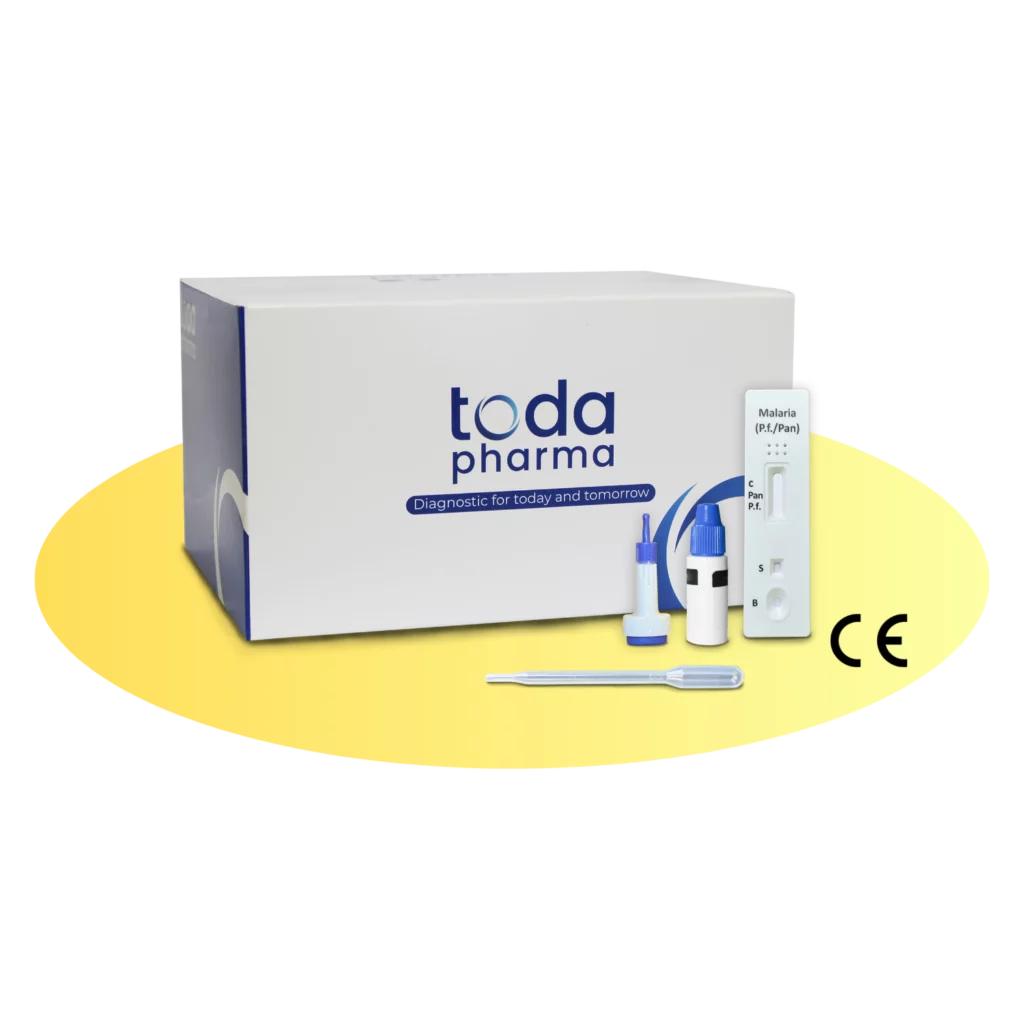
All Toda Malariadiag® V2 kits contain 10 or 25 kits, each comprising:
References
The test should be stored at room temperature (between +2 and +30 °C).
Catalog & product sheet
Tropical Diseases Catalog
Toda Malariadiag®V2 Product Sheet
"*" indicates required fields
Malaria, also known as paludism in French, is an infectious disease caused by a microscopic parasite of the genus Plasmodium. It is primarily transmitted through the bite of an infected female Anopheles mosquito.
Yes, this is possible. An individual can be infected with the virus and transmit it to others without necessarily exhibiting signs of the illness.
This is referred to as an asymptomatic infection. In such cases, the individual feels well, yet the virus is present in the body and can be transmitted, particularly during close interactions such as speaking, coughing, or simply breathing near others.
For this reason, screening and preventive measures remain crucial, even in the absence of symptoms.
Malaria typically manifests as fever episodes, often accompanied by intense chills, followed by significant sweating. These paroxysms can recur cyclically.
Other common symptoms include headaches, pronounced fatigue, muscle aches, and nausea and vomiting. In some individuals, initial signs may be more subtle, potentially delaying diagnosis.
In more severe forms, malaria can lead to serious complications, including neurological disorders, respiratory distress, or organ damage.
In cases of fever upon returning from an at-risk area, it is crucial to promptly consult a healthcare professional to ensure an accurate diagnosis and appropriate management.
Yes, malaria is curable, provided it is diagnosed and treated promptly. Effective treatments, typically based on antimalarial drugs, are currently available to eliminate the parasite. Management depends on the parasite type and the severity of the infection. In most cases, when treatment is initiated in a timely manner, the prognosis is favorable. Conversely, without treatment or with delayed intervention, malaria can lead to severe complications. Therefore, it is essential to seek prompt medical attention for symptoms, especially after residing in an at-risk area.
Yes, malaria can reappear in certain instances. This primarily depends on the type of parasite involved. Some forms, such as those caused by Plasmodium vivax or Plasmodium ovale, can remain “dormant” in the liver for several weeks or even months before triggering a new episode.
It is also possible to contract malaria again after a primary infection, as acquired immunity is partial and temporary.
Therefore, a complete and well-adhered-to treatment regimen, along with vigilance for symptom recurrence (fever, chills, etc.), are essential to mitigate the risk of relapse.
Tell us what you are looking for, and we will promptly provide a tailored solution.