Detection in urine is therefore longer than in saliva, making it a suitable solution for monitoring or screening.

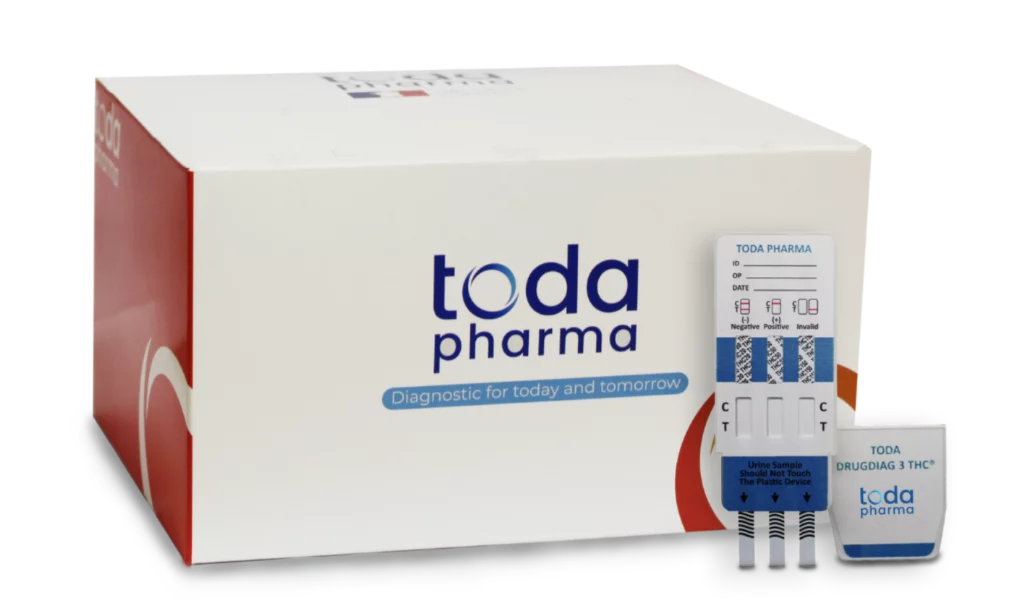
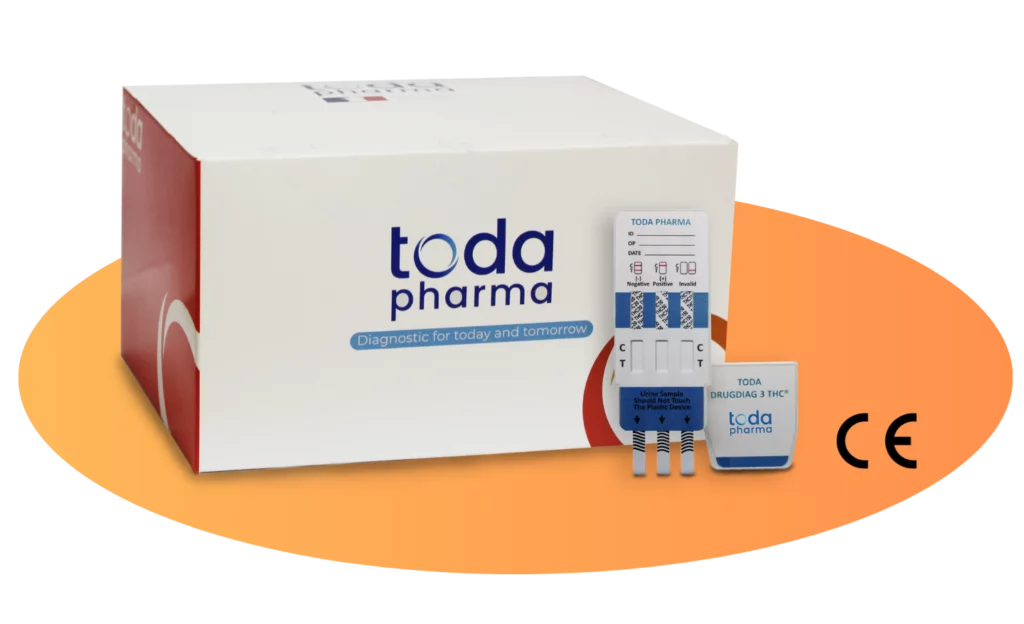
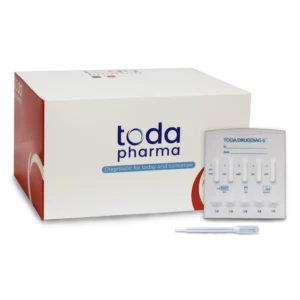
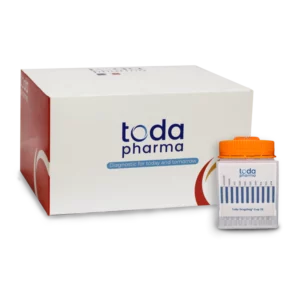
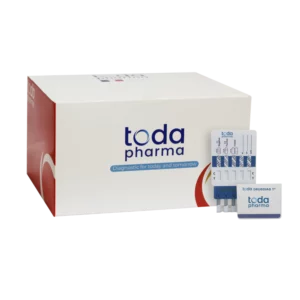
Toda Drugdiag® 3 THC
Rapid semi-quantitative screening test for THC in urine
Immunochromatographic dipstick test for detecting THC (cannabis) levels in urine at three thresholds, to enable appropriate and nuanced care.
The test is based on a competitive method that identifies specific antibodies.
-
Interpretation time
5 minutes
-
Sampling
Urine
Simple, rapid, and precise urine screening
Advantages of Toda Drugdiag® 3THC
RAPID
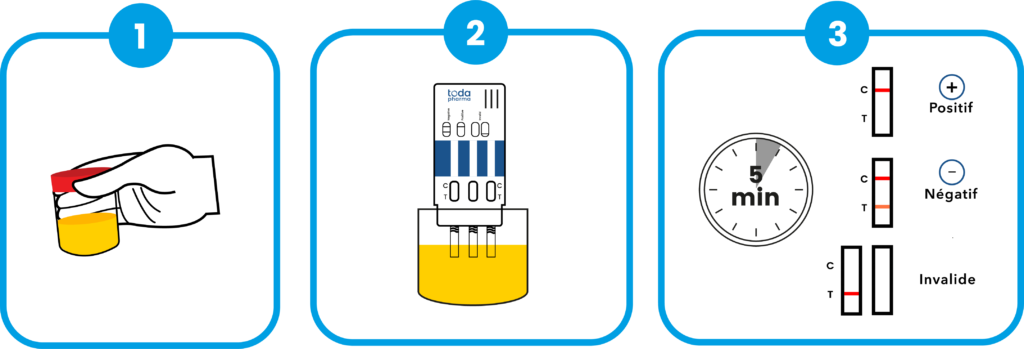
The test is performed in less than one minute and results are obtained in 5 minutes.
PRECISE
Detects three concentration levels of THC for a more precise and nuanced reading.
EASY TO USE
Dip test: no pipette is required. Easy-to-read results.
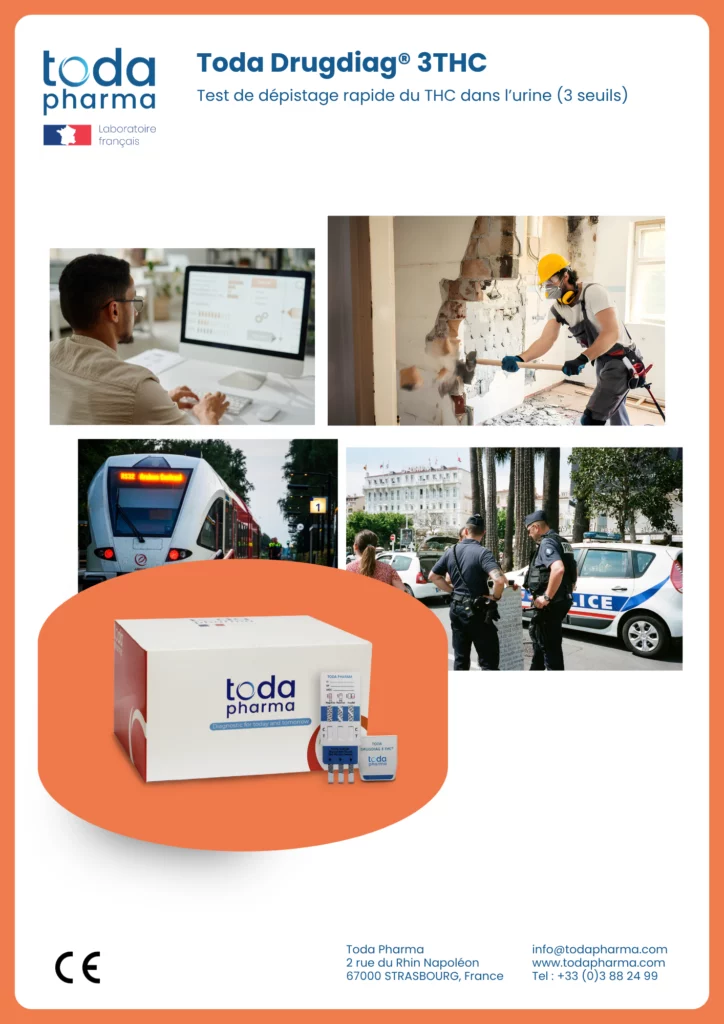
Drugs in the workplace: why is screening an essential safety lever ?
1 in 2 individuals
has consumed at least one drug during their lifetime.
20 to 30%
of workplace accidents involve drug consumption.
5 to 10%
of fatalities in high-risk sectors are linked to drug consumption.
Source: Public Health France Barometer – OFDT 2025 – ANSM 2025 – INRS – ILO – EMCDDA
Table of detected drugs
Consult the list of detected substances and their respective detection thresholds below.
|
Product Name References |
Drugs detected, detection threshold: ng/mL | ||
| Cannabis (THC) | |||
|
Toda Drugdiag® 3THC 1041-3THC |
|
|
|
|
Toda Drugdiag® 3THC+ 1041-3THC+ |
|
|
|
The Toda Drugdiag 3 THC and 3 THC+ are differentiated by their detection thresholds. The 3 THC represents a traditional model, suitable for a wide range of screening situations, whereas the 3 THC+ is intended for users with higher consumption levels.
Contact us!
Require additional information?
Additional thresholds or specific parameters can be provided upon request. Our team remains available to assist you and answer your questions.
An accurate test starts with proper technique
Discover in 3 simple steps how to use the Toda Drugdiag® 3THC.
This test is intended for use by healthcare professionals only.
Practical information
All boxes contain:
- 8 dip cassettes individually packaged
- 1 detailed instruction leaflet
The test should be stored at room temperature (between 2°F and 104°F).
Helpful documents
Product catalogs & data sheets
Catalog of addictive substances
Toda Drugdiag Product Sheet® 3 THC
For any additional information requests
"*" indicates required fields
Learn more
1. Why is it important to screen for cannabis use?
Cannabis screening via a dip-card urine test is an essential tool for detecting the presence of THC, even when the immediate effects of consumption have subsided. THC, the primary psychoactive compound in cannabis, can remain detectable in urine for several days or even weeks, depending on the frequency of use.
This type of test enables:
- Mandatory in the event of a road accident involving personal injury.
- Permitted during random roadside checks,
- Legally regulated in the workplace, for sensitive, high-risk positions (decree of December 13, 2016, confirmed by the Council of State on December 5, 2016)
2. Saliva Test vs. Urine Test: What are the Differences and Advantages?
| Criteria | Saliva Test | Urine Test |
|
Sample Type |
Saliva |
Urine |
| Invasiveness |
Non-invasive no privacy required |
More intrusive sometimes requires supervision |
|
Detection Window |
6 to 12 hours depending on the drug type, (Recent consumption) |
2 to 10 days (Past or chronic use) |
|
Substances Detected |
Active Drug (Current effect) |
Metabolites (Residues after consumption) |
|
Risk of Falsification |

Low (Easy supervision) |
Higher (Dilution, sample substitution) |
|
Context of Use |
Businesses, occupational health, police (Ideal for mobile use) |
Occupational health, hospitals, laboratories (Requires a secure environment) |
3. What is the detection window for cannabis in the body?
The detection window for cannabis in the body varies depending on several factors:
- The quantity consumed,
- The frequency of use (occasional or regular),
- The individual's metabolism,
- As well as the type of test utilized.
With a urine test, THC is generally detectable 3 to 7 days after use in an occasional user, and up to 2 to 4 weeks (sometimes longer) in a regular user, due to its accumulation in fat tissue.
4. Why choose the Toda Drugdiag®3THC?
The Toda Drug Diag 3 THC enables the detection of three levels of THC concentration in urine, unlike conventional tests which offer only a single threshold. This provides a more precise interpretation of the result.
A low threshold may indicate recent or occasional use, whereas a higher threshold often corresponds to more significant or repeated usage.
This distinction aids in a more accurate interpretation of results, particularly within the context of monitoring or prevention initiatives.
5. How to properly prepare for a urine screening test?
- Adhere to pre-collection instructions
For a urine test, it is advisable to avoid excessive water consumption before collection to prevent sample dilution and skewed results. Similarly, it is important to collect a midstream urine sample, meaning after urination has commenced, to avoid contamination.
- Select a clean and appropriate environment
Urine must be collected in the container provided with the test kit. This prevents any alteration of the sample. The container must be handled carefully, without direct hand contact, to preserve sample quality. In a professional setting, it is recommended that sample collection be supervised by a trained individual, ensuring adherence to the procedure and confidentiality.
- Respect the confidentiality and dignity of the tested individual
Screening must be conducted with respect for individual rights, preserving dignity and privacy. This specifically means avoiding any form of stigmatization or humiliation during sample collection. Adherence to these principles fosters cooperation and reduces stress for the tested individual, which can indirectly influence sample quality.
- Ensure traceability and identification
Identify each test (name, date, time, batch number) to guarantee complete traceability, particularly in professional, medical, or legal settings.
- Anticipate potential interferences
Certain medications or health conditions (e.g., dry mouth, treatments) can alter results. Verify the individual's health status and recent substance consumption before the test.
Complementary diagnostics in this range
Need information, training, or a quote?
Tell us what you are looking for, and we will promptly provide a tailored solution.