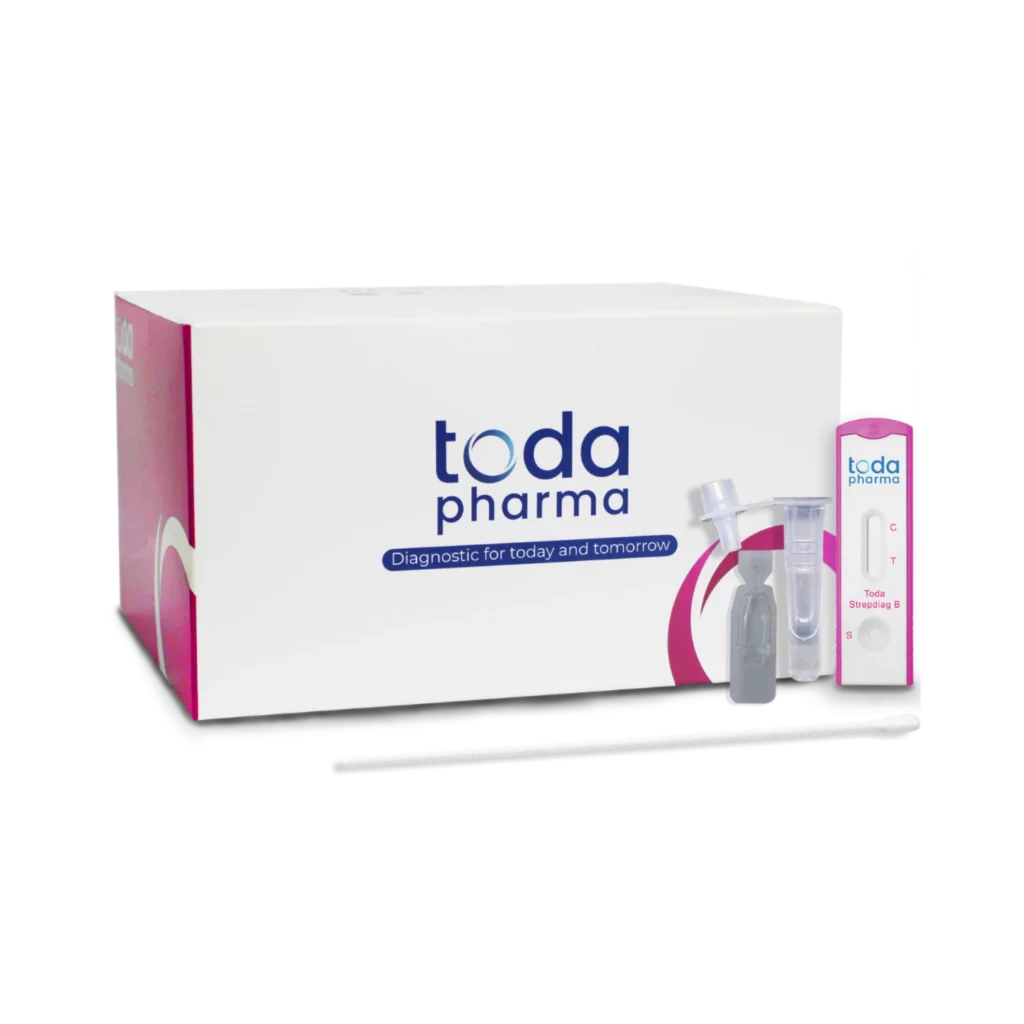
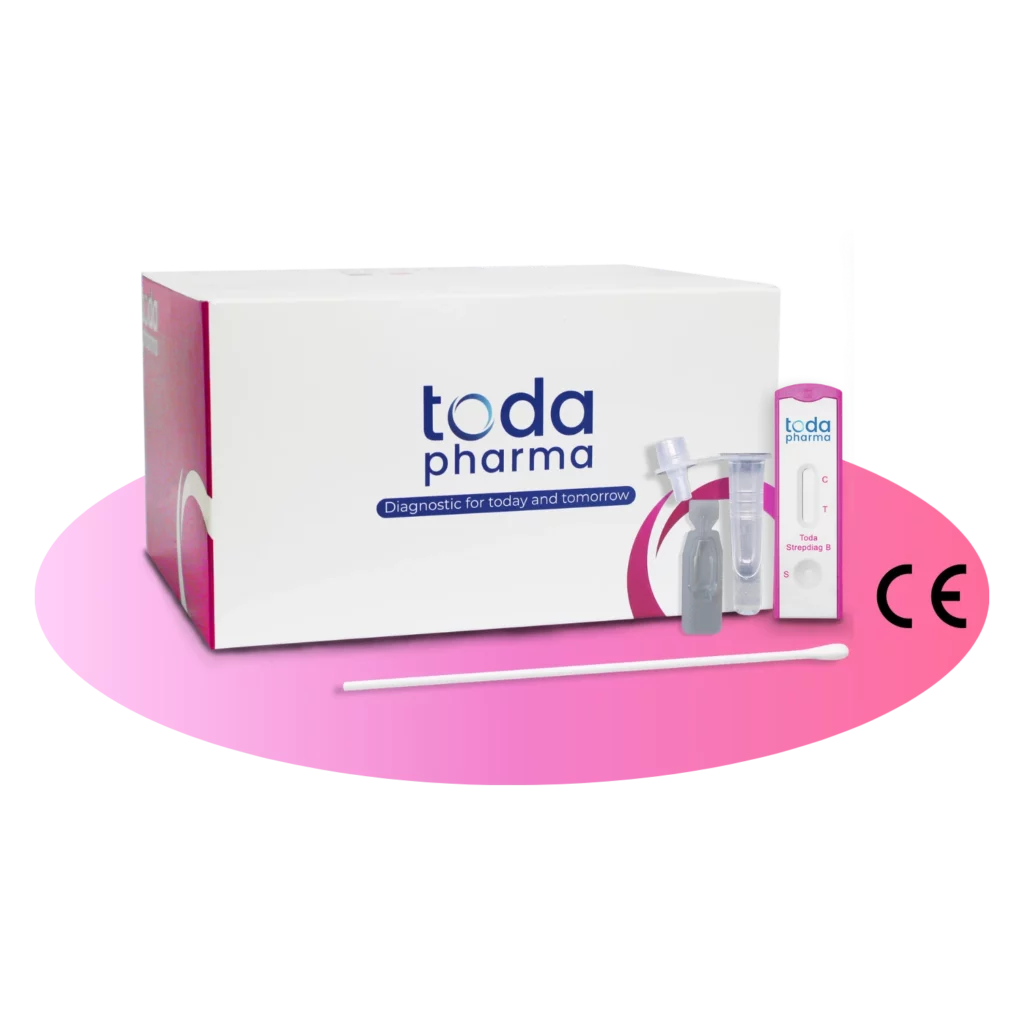
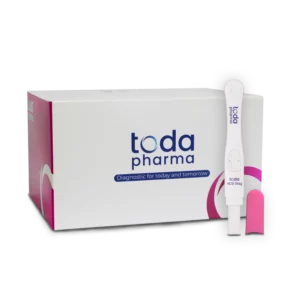
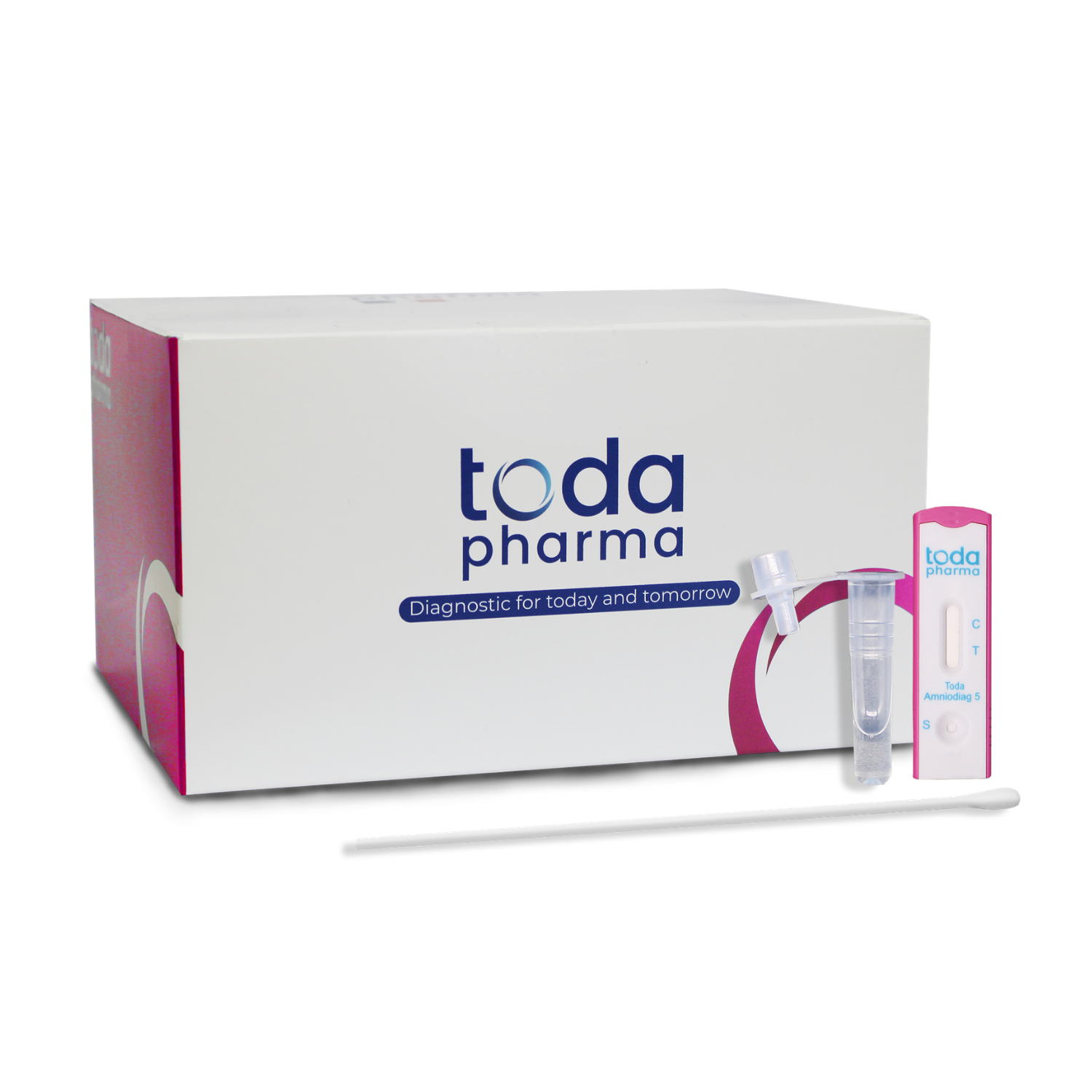
Toda Strepdiag B

Women's health

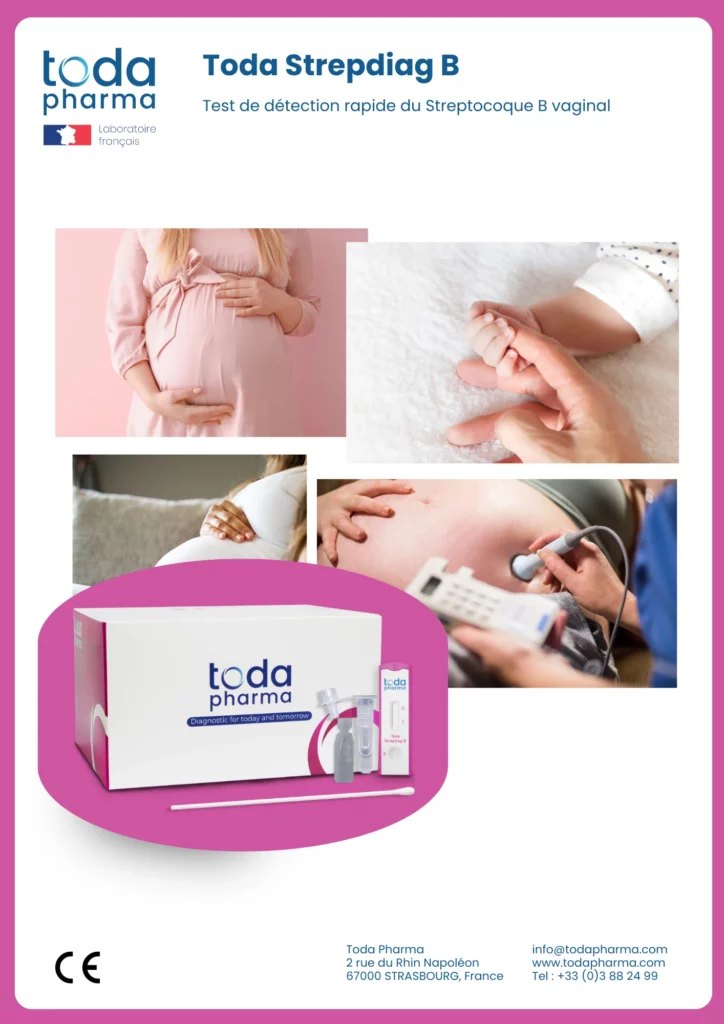
TDR rapid diagnostic test for the detection of Group B Streptococcus (GBS) during pregnancy.

Le Streptocoque B est une bactérie qui peut être naturellement présente chez la femme enceinte . Elle peut être transmise au bébé lors de l’accouchement et représente la principale cause d’infection néonatale grave chez le nourrisson. Le Toda Strepdiag B permet la prévention de l’infection néonatale et une décision clinique rapide.

Accurate, rapid, and comfortable diagnosis

The benefits of Toda Strepdiag B. 

RAPID

Results read in 5 minutes.

RELIABLE

Sensitivity of 96.7% and specificity of 97.6%

ENABLES MORE TAILORED CARE

Contributes to appropriate interventions and optimized care.

How screening reduces the risk of infection by 90%

20 to 30%

corresponds to the percentage of pregnant women who are asymptomatic carriers of Group B Streptococcus. 

50%

This refers to the risk of the bacteria being transmitted to the baby during childbirth if the mother does not receive antibiotic treatment during labor.

80% to 90%

This is the rate of reduction in early neonatal infections achieved through the administration of antibiotics during childbirth.

Source: New England Journal of Medicine – Journal of Multidisciplinary Healthcare – Haute Autorité de Santé (HAS)

An accurate test starts with proper technique

Learn how to use the Toda Strepdiag in 4 simple steps B. 

This test is intended for use by healthcare professionals only.

Practical information

All kits contain:

References

  • 0802013

The test should be stored at room temperature (between +2 and +30 °C).

Helpful documents

Catalog & product sheet

Obstetrics and gynecology catalog

Toda Strepdiag Product Sheet B

For any additional information requests

"*" indicates required fields

Last Name*
Email*
Do you have a question or a specific need? Our team is here to help.

Learn more

1. Is Group B Streptococcus dangerous for the mother?

In the vast majority of cases, Group B Streptococcus is without consequence for the mother. It is a bacterium that can be naturally found in the vaginal area without causing symptoms. The primary objective of screening mainly concerns the prevention of transmission risks to the baby during childbirth.

In cases of intrapartum transmission, Group B Streptococcus can, in rare instances, lead to neonatal infection (respiratory infection, sepsis, or, more rarely, meningitis). This underscores the importance of late-pregnancy screening, as it enables the implementation of appropriate management to very effectively mitigate these risks.

The Toda Strepdiag B test is generally recommendedlate in pregnancy, between the 34th and 38th week of gestation. This timeframe is chosen because it allows for the detection of Group B Streptococcus just before delivery, which best reflects the bacterial status at the time of birth. In fact, detection too early may no longer reflect the situation at the time of delivery, and screening too late may not allow enough time to implement the necessary preventive measures.

Outside of pregnancy, the test may be prescribed if a healthcare professional suspects colonization or in the presence of specific symptoms, in order to guide appropriate treatment.

Complementary diagnostics in this range

Need information, training, or a quote?

Tell us what you are looking for, and we will promptly provide a tailored solution.

Back to Top