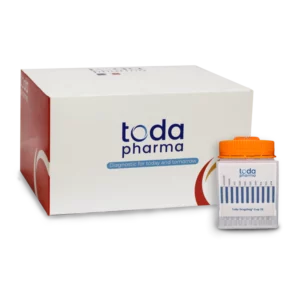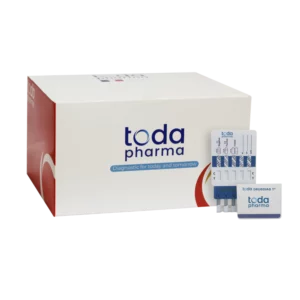

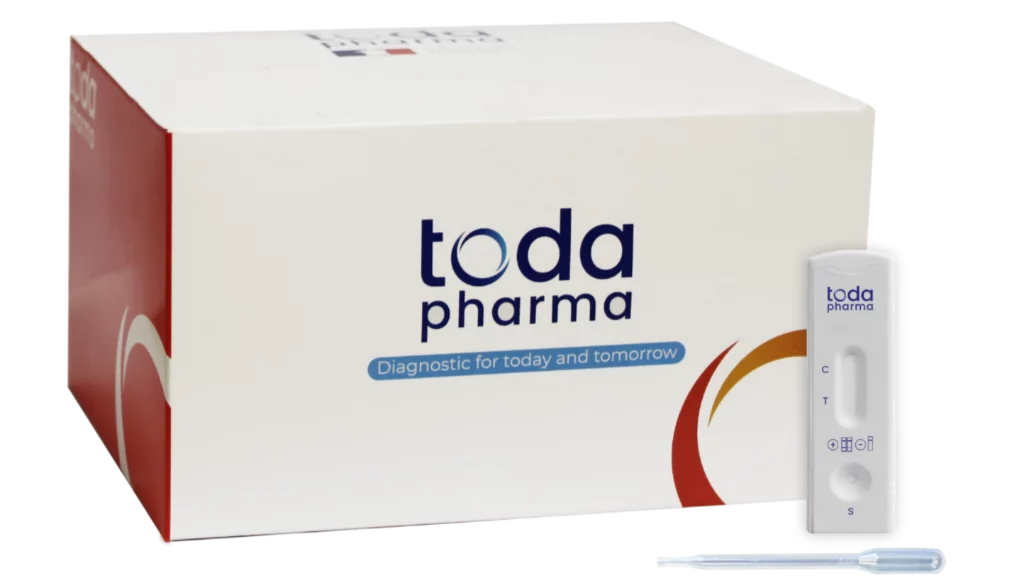
Toda Drugdiag® Cassette – Monoparametric
Rapid drug screening test in urine - Cassette format
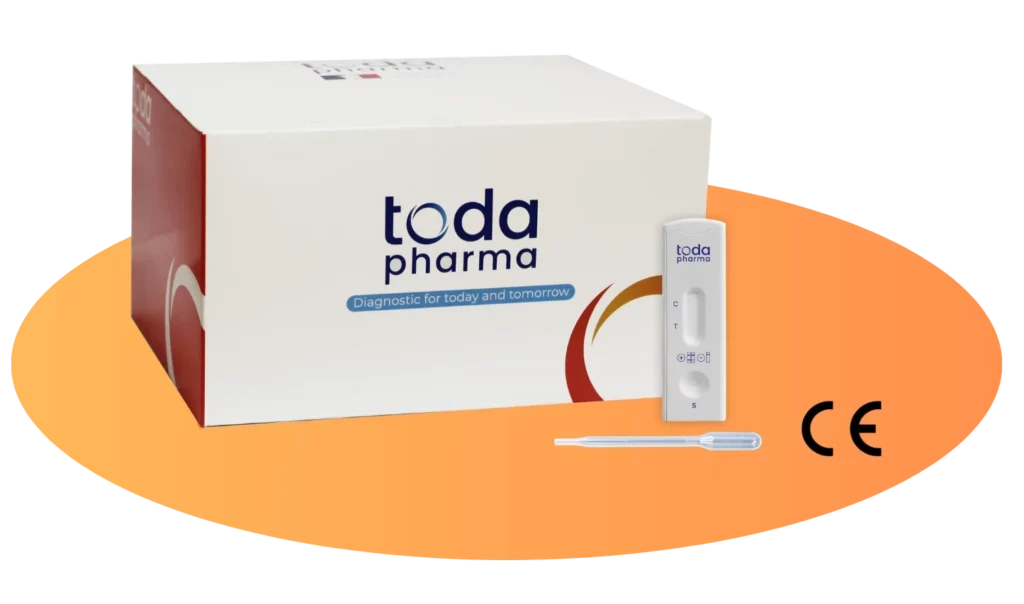
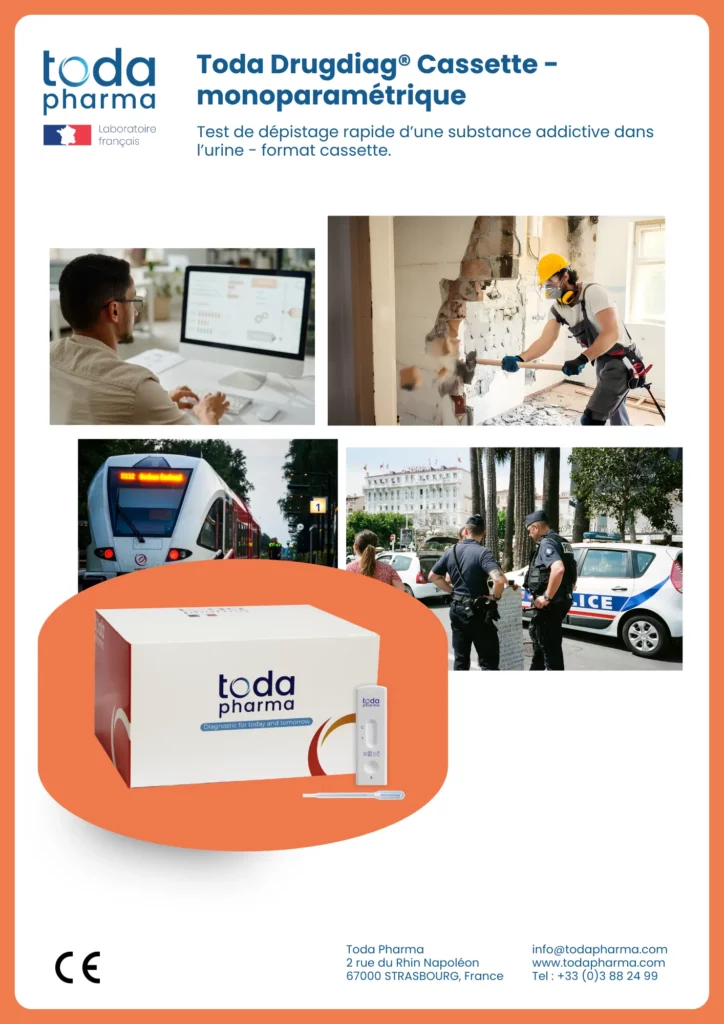
The Toda Drugdiag® monoparametric cassette test enables rapid and qualitative detection of a drug and its primary metabolites in urine.
-
Interpretation time
5 minutes
-
Sampling
Urine
Simple, rapid, and non-invasive urine screening
Advantages of the Toda Drugdiag® Cassette – Monoparametric:
RAPID
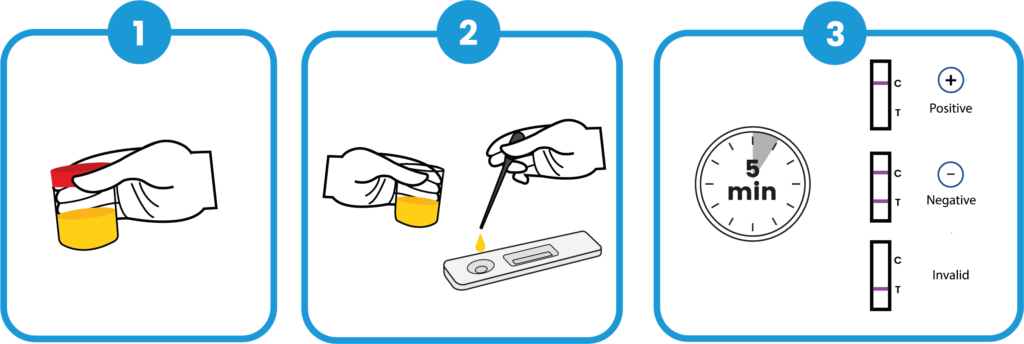
Completion in less than 1 minute and results obtained in just 5 minutes.
NON-INVASIVE
For the tested individual.
TRACEABILITY
Results are obtainable through potential test identification.
Drugs in the workplace: why is screening an essential safety lever ?
has consumed at least one drug during their lifetime.
of workplace accidents involve drug consumption.
of fatalities in high-risk sectors are linked to drug consumption.
Table of detected drugs
Consult the list of detected substances and their respective detection thresholds below.
|
Product Name References |
Drugs detected, detection threshold: ng/mL | ||||||||||||
| THC* | THC150* | AMP* | BAR* | BZO* | BUP* | COC* | MDMA* | MET* | MTD* | MOP* | TCA* | COT* | |
|
Toda Drugdiag® monoparametric cassette Ref. boxes of 25 |
1041-THC |
1041-THC150 |
1041-AMP |
1041-BAR |
1041-BZO |
1041-BUP |
1041-COC |
1041-MDMA |
1041-MET |
1041-MTD |
1041-MOP |
1041-TCA |
1041-COT |
*THC = Cannabis / *AMP = Amphetamines / *BAR = Barbiturates / *BZO = Benzodiazepines / *BUP = Buprenorphine / *COC = Cocaine / *MDMA = Ecstasy / *MET = Methamphetamine / *MTD = Methadone / *MOP = Morphine / *TCA = Tricyclic Antidepressants / *COT = Cotinine
Require additional information?
Additional thresholds or specific parameters can be provided upon request. Our team remains available to assist you and answer your questions.
An accurate test starts with proper technique
Discover how to use the Toda Drugdiag® Monoparametric Cassette in just three steps.
This test is intended for use by healthcare professionals only.
Practical information
All boxes contain:
- 25 individually packaged tests
- 1 detailed instruction leaflet
The test should be stored at room temperature (between 2°F and 104°F).
Helpful documents
Product catalogs & data sheets
Catalog of addictive substances
Toda Drudgdiag® Cassette – Single-Parameter Product Data Sheet
For any additional information requests
"*" indicates required fields
Learn more
1. Why is it important to screen for drug use?
Drug screening via a urine test enables rapid detection of psychoactive substances in the body, even when their effects are no longer apparent. This is an essential tool for protecting individual health, preventing risky behaviors (e.g., driving under influence, working in sensitive environments), and supporting individuals in distress. Within a medical or professional context, screening aids in establishing an accurate diagnosis and guiding appropriate care. A hierarchical superior may administer a urine test, provided it is justified by the employee's job functions.
It can be:
- Mandatory after a road accident
- Authorized during roadside checks
- Legally permissible in companies, for sensitive, high-risk positions (decree of December 13, 2016, confirmed by the Council of State on December 5, 2016)
2. Saliva Test vs. Urine Test: What are the Differences and Advantages?
| Criteria | Saliva Test | Urine Test |
|
Sample Type |
Saliva |
Urine |
| Invasiveness |
Non-invasive no privacy required |
More intrusive sometimes requires supervision |
|
Detection Window |
6 to 12 hours depending on the drug type, (Recent consumption) |
2 to 10 days (Past or chronic use) |
|
Substances Detected |
Active Drug (Current effect) |
Metabolites (Residues after consumption) |
|
Risk of Falsification |

Low (Easy supervision) |
Higher (Dilution, sample substitution) |
|
Context of Use |
Businesses, occupational health, police (Ideal for mobile use) |
Occupational health, hospitals, laboratories (Requires a secure environment) |
3. Can first morning urine be used?
Yes, morning urine is perfectly suitable for this type of test. It is often even recommended because it is more concentrated, which enhances substance detection.
However, the test remains reliable with a sample collected at any time of day, provided the user avoids excessive fluid intake immediately beforehand (which could dilute the urine).
4. How to properly prepare for a urine drug screening test?
- Adhere to pre-collection instructions
For a urine test, it is advisable to avoid excessive water consumption before collection to prevent sample dilution and skewed results. Similarly, it is important to collect a midstream urine sample, meaning after urination has commenced, to avoid contamination.
- Select a clean and appropriate environment
Urine must be collected in the container provided with the test kit. This prevents any alteration of the sample. The container must be handled carefully, without direct hand contact, to preserve sample quality. In a professional setting, it is recommended that sample collection be supervised by a trained individual, ensuring adherence to the procedure and confidentiality.
- Respect the confidentiality and dignity of the tested individual
Screening must be conducted with respect for individual rights, preserving dignity and privacy. This specifically means avoiding any form of stigmatization or humiliation during sample collection. Adherence to these principles fosters cooperation and reduces stress for the tested individual, which can indirectly influence sample quality.
- Ensure traceability and identification
Identify each test (name, date, time, batch number) to guarantee complete traceability, particularly in professional, medical, or legal settings.
- Anticipate potential interferences
Certain medications or health conditions (e.g., dry mouth, treatments) can alter results. Verify the individual's health status and recent substance consumption before the test.
Complementary diagnostics in this range
Need information, training, or a quote?
Tell us what you are looking for, and we will promptly provide a tailored solution.