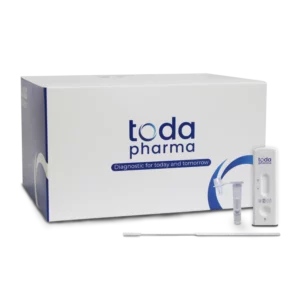
Toda Dengdiag Combo

Tropical Diseases

Rapid Diagnostic Test for Dengue

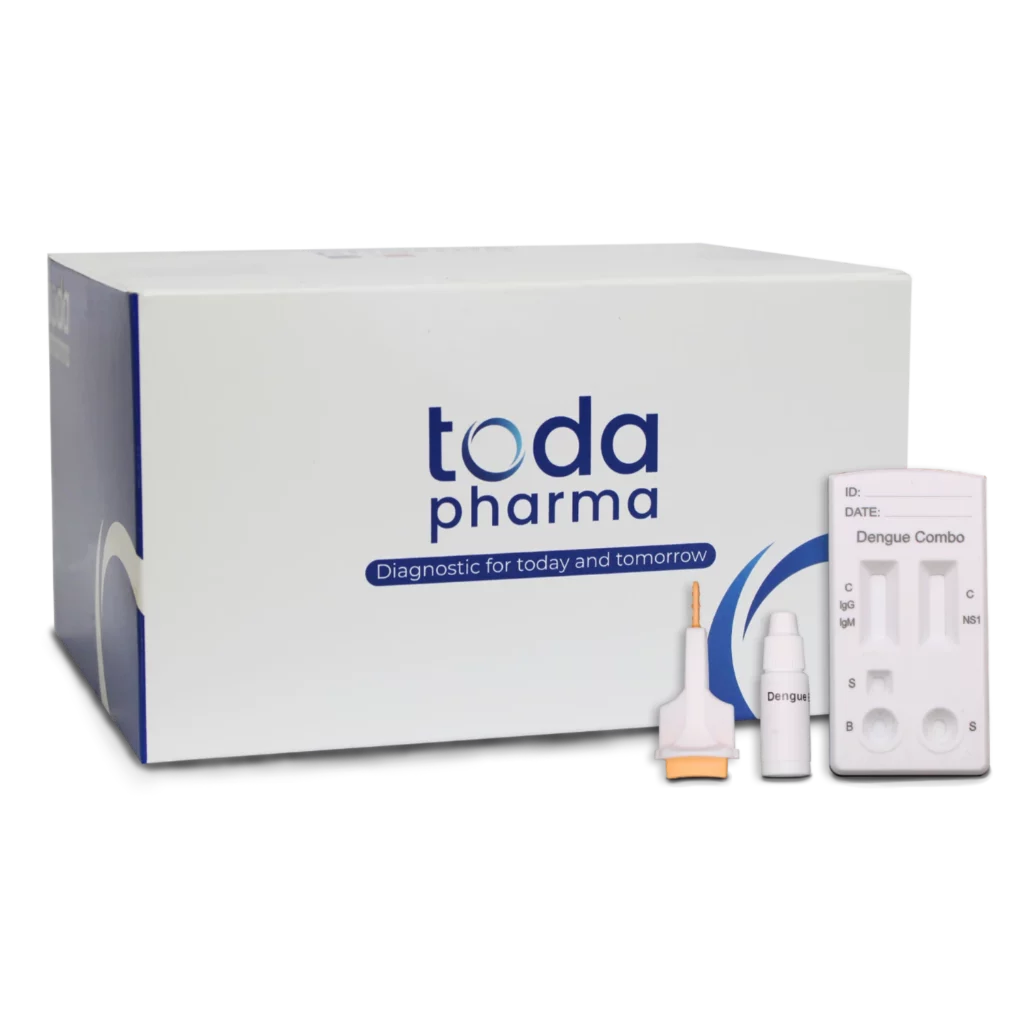
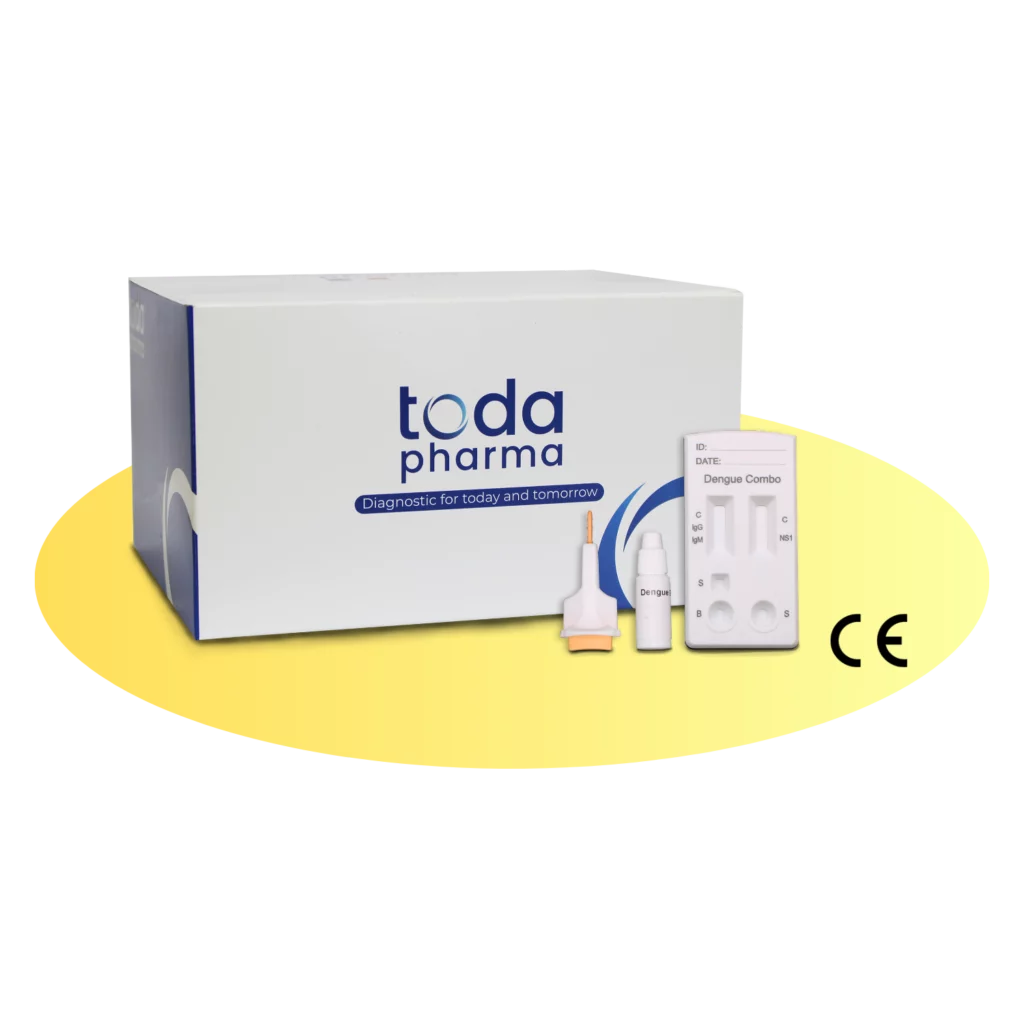
Toda Dengdiag Combo est un test de diagnostic rapide pour la détection qualitative simultanée de l’antigène NS1, des immunoglobulines G et des immunoglobulines M sur un échantillon de sang (sang total, sérum ou plasma).

A rapid, accurate, and convenient test

Les avantages du Toda Dengdiag Combo

CONVENIENT

Single-use safety lancets and disinfectant pads are provided with the tests.

ACCURATE, SENSITIVE, AND SPECIFIC

Sensitivity IgG/IgM: 94.3% – NS1: 95.8%
Specificity IgG/IgM: 99.1% – NS1: 96.1%
Accuracy IgG/IgM: 98.3% – NS1: 96.0%

SIMPLE

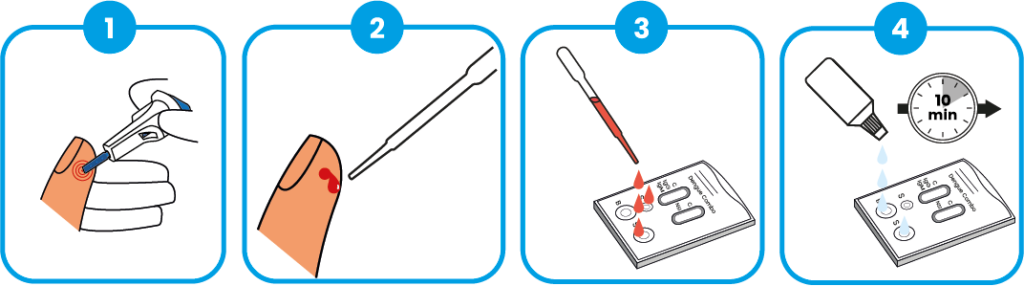
Easy 4-step use, without technical complexity. 

An accurate test starts with proper technique

Découvrez en 4 étapes simples comment utiliser le Toda Dengdiag Combo.

This test is intended for healthcare professionals and their clinical practice.

Practical information

Tous les coffrets Toda Dengdiag Combo contiennent 10 ou 25 kits composés de :

References

  • Box of 10 tests: 22MT7-10
  • Box of 20 tests: 22MT7-20
  • Single test: 22MT7-1

The test is easily stored at room temperature (from +2 to +30 °C).

Helpful documents

Catalog & product sheet

Tropical Diseases Catalog

Fiche produit Toda Dengdiag Combo

For any additional information requests

"*" indicates required fields

Last Name*
Email*
Do you have a question or a specific need? Our team is here to help.

Learn more

1. What is Dengue?

Dengue is a viral disease transmitted by the bite of Aedes genus mosquitoes, primarily Aedes aegypti and Aedes albopictus. These mosquitoes primarily bite during the day.

Yes, this is possible. An individual can be infected with the virus and transmit it to others without necessarily exhibiting signs of the illness.

This is referred to as an asymptomatic infection. In such cases, the individual feels well, yet the virus is present in the body and can be transmitted, particularly during close interactions such as speaking, coughing, or simply breathing near others.

For this reason, screening and preventive measures remain crucial, even in the absence of symptoms.

Dengue often manifests abruptly, with a sudden onset of high fever, accompanied by intense headaches, pain behind the eyes, and overwhelming fatigue. Many individuals also report pronounced muscle and joint pain, to the extent that it is sometimes referred to as 'breakbone fever'. Additionally, nausea, vomiting, and occasionally a skin rash may appear a few days after symptom onset.

In more severe forms, signs such as unusual bleeding or profound weakness should prompt immediate medical attention.

Yes, Dengue can be cured in the vast majority of cases.

While there is no specific treatment that directly eliminates the virus, the body typically clears it on its own within a few days to several weeks.

Management primarily involves symptomatic relief: rest, significant hydration, and medication for fever and pain. Recovery is therefore often complete, without sequelae.

Conversely, certain rarer and more severe forms may require close medical monitoring, as they can lead to complications, highlighting the importance of prompt consultation if symptoms worsen.


Yes, Dengue can indeed recur, even multiple times throughout a person's life. This is due to the fact that there are several types of dengue virus (four main serotypes).

When infected by one serotype, an individual develops lasting immunity against that specific type only, but not against the others. Thus, a person may be protected for a period, then contract the disease again if bitten by a mosquito carrying a different serotype.

Secondary infections can sometimes be more severe, which makes prevention even more crucial after an initial infection. 

Complementary diagnostics in this range

Need information, training, or a quote?

Tell us what you are looking for, and we will promptly provide a tailored solution.

Back to Top